“Our van went out for thirty days. Did it reach the villages on the plan?”
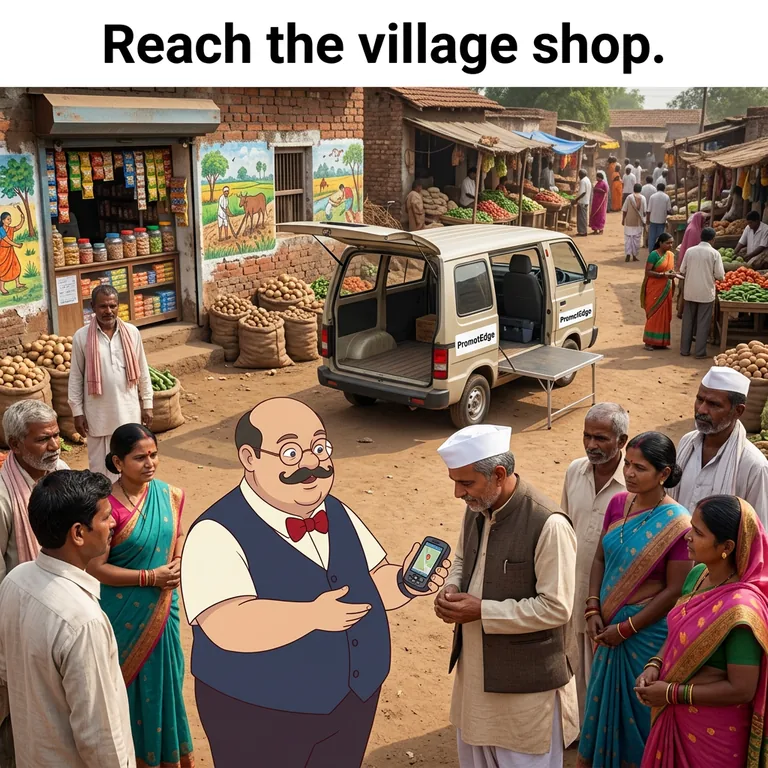
Every van is GPS-tracked, with time-stamped photos and halt-by-halt counts. A supervisor spot-checks villages, and halts that can't be proved are flagged.
“We created demand and the nearest shop didn't have stock.”
We start with your outlet and distributor data, pick villages within reach of stocked retailers, and stock retailers before the consumer push.
“Our city ad, translated, made no sense in the village.”
Scripts, songs and wall copy are written in the local language and dialect from the start, then tested with people from the target villages.
“Our walls were painted over within months.”
Walls are chosen near stocking outlets with the owner's written consent, then photographed and re-checked. Before elections, we plan for wall space getting scarce.
“The crowd at the haat was big, but nobody called us later.”
Interested people register by missed call or a simple form with village and phone number. Leads go to the nearest dealer the same day.
“We ran rural in the monsoon and the vans got stuck.”
We phase the calendar: retailer and influencer work in the monsoon months, consumer activity after the harvest, when cash is in hand.
“We can't tell rural sales from what would have happened anyway.”
We compare covered clusters with similar uncovered ones on outlets stocking and sell-out, so you see what the programme added.
“Villagers don't trust a brand they've never seen.”
People in villages trust what they see demonstrated and what a neighbour recommends. So we use demonstrations and local voices such as progressive farmers and self-help group leaders, with paid endorsements disclosed.
“We covered many villages once, and nothing stuck.”
Repeat visits to fewer clusters (groups of nearby villages) usually return more than one pass over many. We build the plan cluster by cluster.
“Village shopkeepers don't push our brand.”
We enrol and brand village and market-town retailers, with simple schemes (offers for the shop), so demand is met at the counter.
“Rural spend feels like a black hole. We can't see what each format costs.”
Every plan is costed by cluster and format, so you see the cost per contact and per lead before you approve. After the season, you see the cost per contact, lead and sale by format.
“Our seed and crop-product demos reach farmers after sowing is over.”
We time village meetings and demonstration plots to the sowing season, so farmers see the product at the right time.
“We sent leads to dealers and never knew if anyone followed up.”
Each lead goes to the nearest dealer the same day. The buyer also gets a WhatsApp or voice message in the local language, and we call back a sample.
“Officials stopped our loudspeaker at the haat.”
Haats (weekly village markets) generally need the panchayat's or market committee's permission, and loudspeakers need police permission where required (general guidance, not legal advice). We get crews and permissions in place first.
“We sell loans and insurance, and a van can't explain that.”
Banks, insurers and lenders need trust first, so we use local influencers and meetings.
“We don't sell soap or biscuits. Is rural marketing for us?”
It can be. Rural work also fits makers of industrial equipment, healthcare awareness camps and real estate plot launches near towns.
“Once the van leaves, the village forgets us.”
WhatsApp keeps the conversation going after the van leaves, and regional radio and print can run alongside.
“Vans, walls, haats, folk shows: we don't know which to pick.”
Most programmes use three or four formats together. We choose them cluster by cluster (a cluster is a group of nearby villages) and put routes, haat days and wall sites on one sheet.