
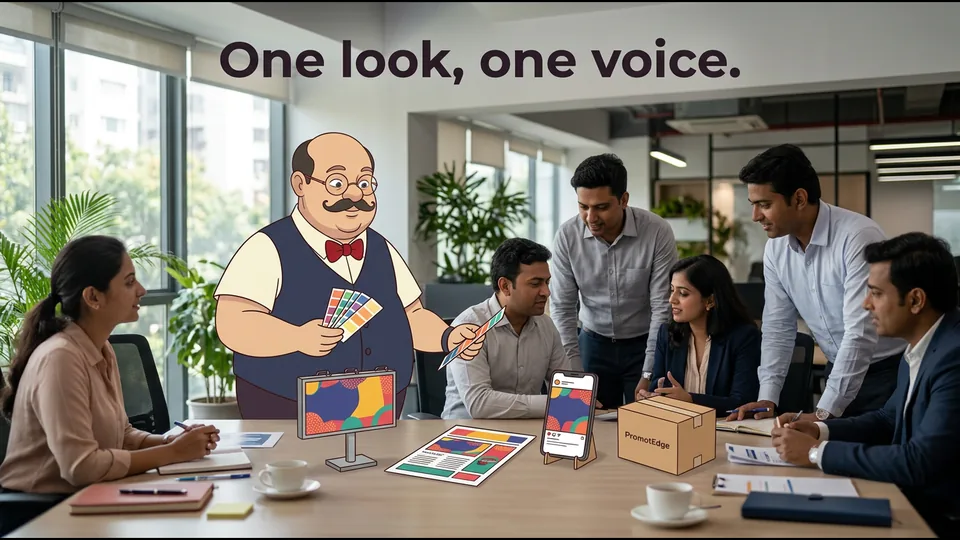
Integrated marketing is a strategy where a brand uses several channels, such as social media, email and ads, and gives its audience one consistent message through all of them. The aim is simple. Every message should feel connected to the others, so each builds on the other and nothing looks random. Want one plan across your channels? See our integrated campaign planning in India.
What is integrated marketing and how does it work?
Integrated marketing brings together tools like social media, email and website ads. In the trade, integrated marketing communications means every channel carries the same message. Search, social media, email, ads and events are planned as one plan with one report, so the buyer meets one voice. An integrated marketing agency plans that for you and reports across all the channels. (PromotEdge.) The result is one consistent brand message. And when these channels work together, the message gets stronger.
The idea is not new. The American Association of Advertising Agencies described it as planning that sees the added value of one comprehensive plan, and that combines the separate disciplines to give clarity, consistency and the most impact.
A customer may meet your brand in several places, for example by following your Facebook page or listening to your podcast, and then the brand starts to feel familiar. That familiarity makes customers engage with you more often.
Whether a customer sees an ad online, reads your email or browses your social media, the core message is the same, and the more often they meet your brand in different ways, the stronger the message becomes. That is the point.
| Question | One integrated agency | Separate agency for each channel |
|---|---|---|
| Who plans | One team plans every channel around one message | Each agency plans its own channel |
| Who reports | One report across all channels | One report per channel, which you must join |
| Who answers for the result | The agency answers for the combined result | You answer for the gaps between channels |
| What to watch | Fewer people to brief | Mixed messages if nobody coordinates |
Do your ads, emails and social posts say the same thing to a buyer, or does each channel tell its own story? Tell us what you sell and where, and we will say what we would plan first: talk to us about integrated campaign planning.
Four key parts of integrated marketing
Do it with planning and a professional approach, and a brand can stay on customers' minds and grow its profits. That takes work. Here are the four key parts of integrated marketing.
1. Consistent visuals
A brand needs one visual look across platforms. Keep it simple. If a brand has a green logo on its website, it should use the same green on its social media, and the same shade of green should show in ads, social posts and emails.
2. Clear messaging
A marketing agency first works out the brand's main message. Say a brand positions itself as eco-friendly: then every communication should carry that same idea, whether it is an Instagram post or a direct mailer. Same idea throughout. Clear messaging builds trust, because customers get the same value on every channel.
3. A matching presence on many platforms
Integrated marketing uses many channels, such as email campaigns and social media, to improve reach. The brand message stays the same on all of them. What does that look like? A digital marketing agency might post an ad on Instagram, send an email and then show a YouTube video, all built on the same main idea.
The idea stays the same. It can look different on each platform, though: an Instagram ad can be short and visual, while an email can carry more detail.
4. Targeting your audience with data
Integrated marketing means listening as well as talking: data shows brands what their prospects prefer, what bothers them and how they behave. Feedback shows what is working.
A good campaign knows who it wants to reach. Start with research. An integrated marketing agency usually researches what the target audience wants and needs, because messages work well when they reach people who are interested in the brand. Then each message matches their interests.
The agency also checks whether the message is working. It looks at likes, shares and comments.
The 4 Cs of integrated marketing
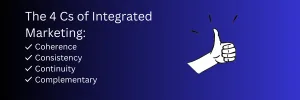
The 4 Cs guide how you build a campaign.
- Coherence: messages on all platforms connect logically.
- Consistency: keep the same visual style, tone and voice so people recognise your brand.
- Continuity: each piece of content flows naturally into the next and tells one story.
- Complementary: different platforms work together to lift the whole campaign.
Follow these 4 Cs and your audience gets a smooth, unified experience of your brand. The result? Better brand recall and loyalty.
How an integrated marketing agency helps
Working with an integrated marketing agency makes this easier. Why? Agencies know how to combine different tools into the right solution. Here is how an agency helps your business.
Building a strong brand message
An integrated marketing agency helps you define your brand's main message, and then makes sure every post, ad and email carries it. Why bother? A clear message helps customers quickly see what your brand stands for and why they should choose you.
Choosing the right channels
Agencies know which platforms suit which content and audience. They choose the right channels, so your message reaches the most relevant people. Your budget works harder too.
Creating consistent visuals
A big part of marketing is a consistent look across all platforms. So agencies use the same colours, fonts and design elements everywhere. Consistent design helps people recognise your brand, and it makes your business look more professional.
Creating content for each platform
Not everything works everywhere. Agencies adapt your message for each platform and keep the main idea intact, so a social media post might be short and visual, while a blog post can carry more detail. That way, your message fits the format and the audience of each platform.
Collecting feedback
Agencies also pay attention to what your audience says back. That helps them improve future campaigns.
Using data to reach the right audience
Integrated marketing agencies use data to reach the right people. A few things they look at:
- Age
- Location
- Interests and more
Your message then reaches the right prospects. And you have a better chance of getting them to engage with your brand.
Monitoring the results
Agencies track how your campaigns perform by looking at views, likes and sales. Something not working? They can change the campaign in real time and improve the results.
With the right agency, you can measure the ROI (return on investment) of your integrated marketing. Then adjust your approach. Get more from it.
Examples of successful integrated marketing
Here are some examples of integrated marketing at work.
Starbucks' Pumpkin Spice Latte
Every autumn Starbucks runs a campaign around its famous Pumpkin Spice Latte, using Instagram Reels and Facebook Live sessions that answer the question of when the drink will be back. The content changes with the medium. All of it follows one central theme.
Old Spice's "Smell Like a Man" campaign
The Old Spice men's deodorant campaign started on TV in 2010 with Isaiah Mustafa. It then moved to YouTube. There, the brand replied to tweets directly with videos. This multi-contact approach was reported to have lifted sales, and it shows how well interactive, integrated campaigns can work.
Apple's "Shot on iPhone" campaign
Apple's "Shot on iPhone" strategy promotes the iPhone camera using photographs, and even music videos and films shot entirely on an iPhone, and the company relies mainly on user-generated content (UGC). Customers help shape the brand's values and messages. The work shows the quality of the product.
Before you begin: some guidelines
- Start with a strong core message. Define what all channels will say.
- Use more than one channel. Find where your audience spends time, such as social media, email or TV, and meet them there.
- Test and measure. Use metrics to watch performance, and adjust campaigns in real time based on the data.
Test regularly. Adapt your strategy based on results, and your integrated marketing stays relevant over time.
Which channels does integrated marketing use in India?
Integrated marketing joins the channels your buyers use, so they see one message wherever they meet you. In India that often means a mix of these:
- Search and your website, where people look for answers.
- Social media and creators, where people discover brands.
- WhatsApp and email, where you keep in touch.
- Outdoor, print, radio or TV, where you reach people who are not online at that moment.
- Events, dealer meets and in-store material, where people meet you face to face. If you plan in-store material, read how a dangler, wobbler, shelf talker and standee differ.
Pick the channels by where your buyers are, not by what is fashionable. Then keep the same idea, look and offer in every one.
Sources
- The Open University (OpenLearn), Social marketing, section 5.2 An integrated marketing communications framework, read October 2026: open.edu