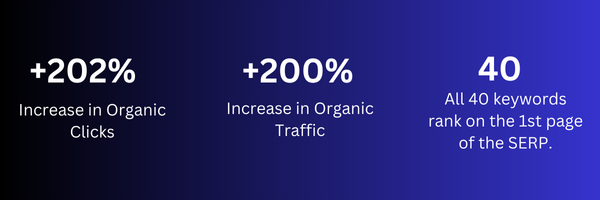
Even a big steel company can find it hard to get noticed online. We took the right path and brought more organic clicks to its TMT bar brand. There was no magic in it. We used sound strategies and studied the market. We followed SEO practices that meet industry standards.
Who was the client?
The client makes TMT bars, a type of steel bar used in construction. TMT bars are known for high strength, durability and versatility. So they suit many construction projects, from homes to commercial buildings and infrastructure. The brand is already well known across India.
What challenges did PromotEdge face?
The brand wanted us to rank its website higher on the SERP (search engine results page) for industry-specific keywords. They also wanted higher domain authority and more brand awareness. Most of all, they wanted more clicks and more traffic. But the website was outdated and not SEO-friendly. So we started with these challenges:
- Improvement in domain authority and higher traffic in general.
- Ranking in industry-specific keywords with a higher position in the SERP.
- Fixing technical SEO gaps and website speed issues.
- Improving brand awareness and increasing organic clicks.
How did PromotEdge tackle the challenges for the TMT bar brand?
We needed to raise domain authority, bring more traffic and clicks, and make the brand better known. In the first months, we took these steps:
1. Fixing technical SEO issues
Technical SEO is the backbone of an SEO-friendly website. For this brand, we fixed broken links, wrong canonical tags and missing structured data. We also corrected the site architecture and added schema markup for better indexing. We tidied the robots.txt and sitemap files too. These fixes made the website easier for search engines to crawl and index. That helps rankings.
Structured data is a standard way to give Google details about a page. Google Search Central says that, on a recipe page, it can list the ingredients and the cooking time. It also says structured data can make search results more engaging, which Google calls rich results.
2. Fixing website speed
Page speed matters for both user experience and SEO. The client’s website loaded slowly, which could put visitors off. Our web development team removed unnecessary scripts and reduced image sizes. They enabled browser caching and set up a Content Delivery Network (CDN). The site became faster. That made it nicer to use and helped its performance on the SERP.
Google Search Central lists Largest Contentful Paint, or LCP, as a measure of loading performance. It says to aim for the LCP to happen within the first 2.5 seconds of the page starting to load.
3. Focusing on quality content
Content is still what people come for. So we wrote content that is informative and interesting to read. Google’s algorithms also prefer quality content. It should answer what users are looking for and be easy to read. We did not stick to one format. We also made videos, infographics and other multimedia content. This variety helped us rank organically.
Google Search Central says content should be made for people first, not to change search rankings. It says Google's systems aim to put the most helpful content first.
4. On-page optimisation
On-page SEO is a very important part of growing a website organically. We used the right main and side keywords for the industry in the page title, the short description, the headings and the text. This helped the pages get indexed properly. On-page SEO plays a big part in ranking high on the SERP and bringing in fresh organic traffic. We also updated the content regularly and audited it closely to hold its rankings.
5. Off-page optimisation
On-page SEO is only half of the work. Off-page SEO helps raise a website’s domain authority. By building quality backlinks, we increased the authority and credibility of the content. This signals search engines to rank it higher. Social media activity and brand mentions also helped, and so did awareness of the brand in its industry.
Domain authority is a score made by Moz. Moz says it predicts how likely a website is to rank on search results pages compared with others, on a scale of 1 to 100. Moz also says it is not a direct Google ranking factor.
6. Local SEO
We started targeting the local audience, who were also the client’s target audience. The brand and its parent company are already well known nationally. We brought that national name into the local scene by using it in landing pages, blogs and so on. We also earned local citations from reputed websites and directories. This made the business more relevant in the local community. The brand has a country-wide name. Even so, being relevant in the local market helps it grow further.
7. Monitoring and analysis
All these efforts count for little if we do not watch the data. At PromotEdge we use analytics tools to measure progress. Digital marketing changes often, so we watch Google updates, our numbers and keyword rankings. This shows us how well our strategies work. Where something needs improving, we improve it and move from good results to better ones.
What did the work cover?
We set out to solve the client’s problems. We updated the website and made landing pages for local markets. We built quality backlinks to support the website’s domain authority. We worked on the client’s problems for almost a year. Here is what the work covered:
- Results are shared in a 1-to-1 walkthrough.
- We measured progress with analytics tools throughout.
- The work covered technical fixes, site speed, content, on-page, off-page and local SEO.
What did we learn?
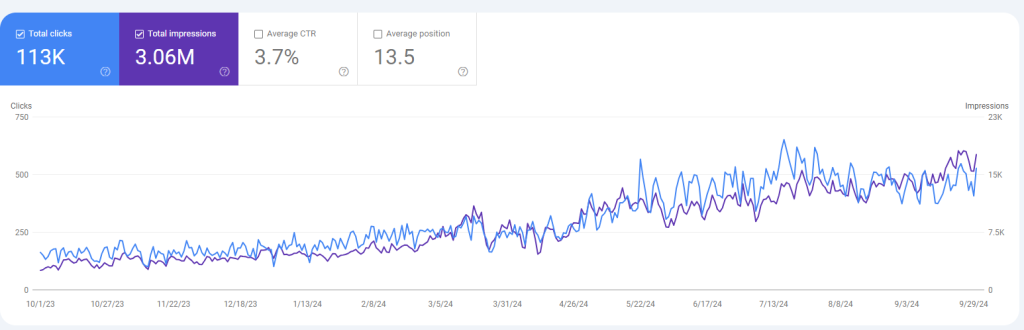
You might think paid advertising has made organic SEO unnecessary. This case shows otherwise. With search engine optimisation alone, we brought more organic traffic in 12 months. An outdated website now gets more organic clicks. That took steady effort to keep up with changing algorithms. Digital marketing keeps changing. To stay ahead of competitors you need to adapt. We at PromotEdge understand that and use new technologies to keep our clients ahead.
Sources
- Google Search Central, Intro to How Structured Data Markup Works, December 2025: developers.google.com
- Google Search Central, Understanding Core Web Vitals and Google search results, December 2025: developers.google.com
- Google Search Central, Creating helpful, reliable, people-first content, October 2026: developers.google.com
- Moz, Domain Authority: What is it and how is it calculated, March 2025: moz.com
- Google Search Central, How to Specify a Canonical with rel="canonical" and Other Methods, July 2026: developers.google.com
- Google Search Central, Robots.txt Introduction and Guide, December 2025: developers.google.com