Want to grow profits from accounts that are already doing well? Then you must know when and how to scale. For scaling done in steps, see our Google Ads management services in India. Timing is the hard part. You need to know when your account is ready to scale, because scaling too early can backfire on an account that was doing well.
If you're trying to scale success in performance marketing while running Google Ads, you're in the right place. We're a PPC marketing agency, and in this blog we'll tell you how to know if your Google account is ready to scale. Then we cover how to build creatives that work and how to scale strategies that work.
How To Tell If Your Google Ads Account Is Ready To Scale?
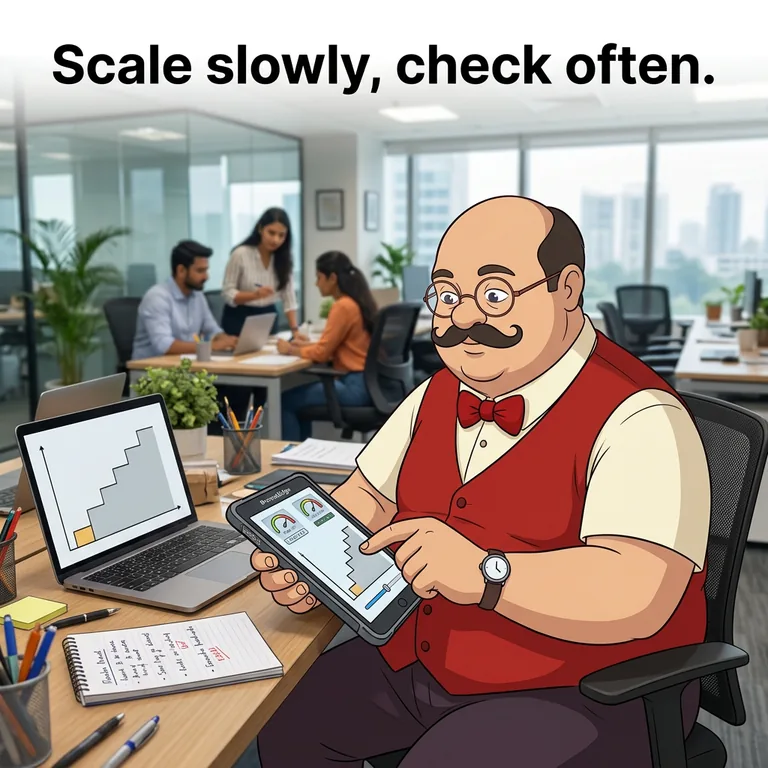
If you've been running Google Ads for some time, you know that starting a new campaign is easier than scaling it for success. How to scale Google Ads: scale only after the results hold, then raise the budget in steps while you watch the enquiries and the cost of each one. Scaling too early can backfire. Add new keywords and creatives one test at a time. (PromotEdge.) So make sure your account is ready before you use any scaling-up strategy.
As a general rule, you should ensure your Google Ads account should:
- Consistently meet cost per acquisition (CPA) and return on ad spend (ROAS) goals, with trustworthy conversion tracking.
- Consistently meet the spending amount.
- The Google Ads account is generating lead/sales quality standards.
- The ads should have clear buyer personas and ad creative/audience targeting optimized.
- How To Scale Google Ads Creatively?
Once you're sure your Google Ads are ready to scale, the next step is to win on creativity. Your creative has to make your audience engage and interact with the ad. Say you already have a winning creative, whether it's display ads, video ads or something else, and it's bringing conversions, so you may want to put those ads in search campaigns too. You can, by creating new assets or entirely new search ads.
So, the checklist for creative ads is:
- A good share of viewers watch the video to the end
- High view-through or conversion rate
- Landing page visitors
When you turn the visual creative into an asset, you can express the core theme of the ad within the character limit. Video ads are a great way to put your product and the brand front and centre, and they needn't feel pushy to the consumer when they lean on cheeky language such as “try”/”demo” language.
How Can You Translate Video Ads Into Text Ads?
As a PPC management company, we scale ads by using one creative in many formats. The logic is simple. You reuse what your consumer already prefers, and you give customers more chances to engage across various touchpoints.
Say you want to turn your display or video ad into a text ad. Start with the terms the video ads already use, then add sitelinks and price assets, which Google used to call extensions. Keep leaning on the language the brand already uses in its video ads, because that helps recall value and shows consumers a brand they already know.
Turn text ads into video
Great text ads with high engagement can go the other way and become video ads. Take the core message of the ad. Then turn it into a video ad.
The success of turning visuals into video relies on these factors:
- Know your audience and understand what grabs their attention
- Using video and audio mediums to thier full potential
- Maintain the core tone of the ad and language of the text ad
To scale ads, use different types of creatives, whether you run Performance Max or creative campaigns. Our view: that variety can help you talk to your prospects and reach more of the market.
How to scale Google Ads: tips for successfully scaling your strategies
A PPC account manager can take many paths to run successful campaigns and scale up performance. Some matter more. Here are the ad scaling strategies we'd start with:
- Bid management
- Bid adjustment
- Ad testing
- Keyword optimization
Bid Management
Bid management is one of the basic parts of scaling up your Google Ads. The rule is simple. For better bid management, bid higher when ROAS is above your target, and bid lower when ROAS is below it.
Apart from that, review your bids every 14-21 days. That gap is our working rule, and it sits close to Google's own advice for its automated bidding, which is to judge a change over two conversion cycles or a fortnight, whichever is longer. Try to make changes in your performance review on the same day of the week. It keeps your bid strategy simpler, and it means one review can be set against the next.
Bid Adjustment
Bid adjustment is taken into consideration based on the following factors:
- Device preference (mobile, computer, tablet)
- Audiences (e.g., remarketing)
- Day of the week (or time of day)
To manage bids, weigh these factors, then review performance at the campaign level. Testing how the ad performs? Check the ad group level and set the device adjustment to match.
Ad Testing
Ad testing is the process of creating new ads to test their performance against existing ads. So if you already know what works for you, copy that process of bid adjustment and bid management to help optimise your ads.
As a general rule, pick any one of your campaigns from your old archives. Use it to prove which structure will work for you before you apply it to scaling your performance. A PPC ad manager has to do this again and again, since each round speeds up better optimisation and gives the next scaling step a structure that has already been tested once.
Keyword Harvesting
Adding new keywords matters, but a keyword should go into an ad group only if it belongs with that group's theme. If it doesn't, it needs a different ad group. One mistake to avoid is using similar keywords too closely in a single ad text. And whenever you add a new keyword, if you bid manually, keep its bid the same as the others in the group.
So, Why Consult PromotEdge for Performance Marketing?
As this blog has discussed, scaling up your ads matters a great deal. But it's like walking on eggshells. One mistake can hurt your earlier efforts, so it's wise to work with professionals who have experience.
We're a PPC management company. Our scaling strategy sits where subjective and objective signals meet, in equal parts. Want to scale your Google Ads? Then make an appointment with us.
Sources
- Google Ads Help, About responsive search ads, No date shown on the page. Read 19 November 2026. Google sells the advertising this page describes. support.google.com
- Google, New tools to create more engaging ads, 15 September 2022. Read 19 November 2026. Google sells the advertising this page describes. blog.google
- Google Ads Help, About price assets, No date shown on the page. Read 19 November 2026. Google sells the advertising this page describes. support.google.com
- Google Ads Help, About Performance Max campaigns, No date shown on the page. Read 19 November 2026. Google sells the advertising this page describes. support.google.com
- Google Ads Help, About Smart Bidding learning, No date shown on the page. Read 19 November 2026. Google sells the advertising this page describes. support.google.com
- Google Ads Help, About bid adjustments, No date shown on the page. Read 19 November 2026. Google sells the advertising this page describes. support.google.com
- Google Ads Help, Ad group: Definition, No date shown on the page. Read 19 November 2026. Google sells the advertising this page describes. support.google.com
- Google Ads Help, Basic tips for building a keyword list, No date shown on the page. Read 19 November 2026. Google sells the advertising this page describes. support.google.com