“We paid for a corporate film and it's too long for anyone to watch.”
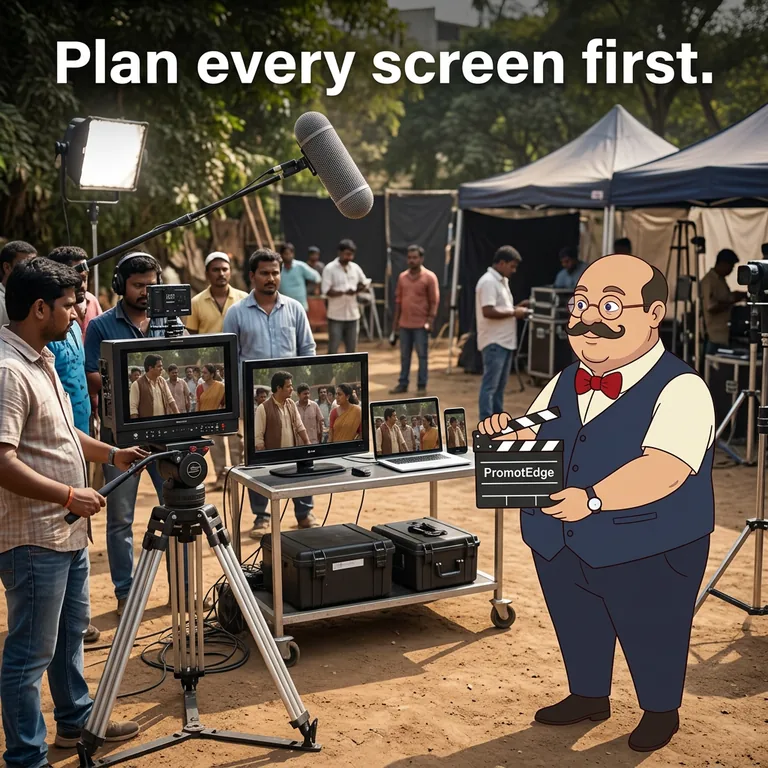
We plan a full version for presentations, plus 60-second and 15-second edits for the website and social, from the same footage.
How we work on this
What we look at first
- Where viewers stop in your last film, from the platform's own watch report.
- Every place the film plays today.
The steps we take
- List every place the film will be used.
- Sign off the script before the shoot.
- Plan a full version for presentations and short edits for the website and social, from the same footage.
- Deliver the master and every cut-down, with a plan for where each one runs.
What changes when it works
A buyer can watch a short version on a phone. The full version is ready for a meeting or an exhibition.
What we need from you
The places your film must play.
“The shoot went well, then the edit dragged on for months.”
Edits stall when the script was not agreed first. We lock the script, or a storyboard for animation, before the shoot and agree the review rounds up front.
“Filming in our plant will stop production.”
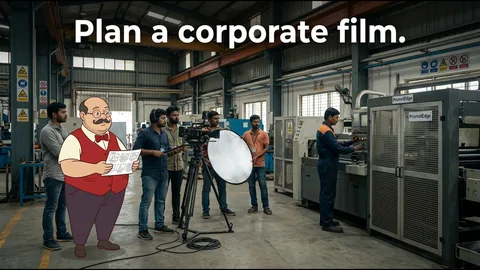
It does not have to. We plan shots around shifts, follow your safety rules and brief each department. Safety and minimal disruption come first.
How we work on this
What we look at first
- Which lines and hours can be filmed with the plant running, agreed with the plant head.
- Your safety rules.
The steps we take
- Visit the plant (a recce) to see the lines, shifts and routes.
- Agree permissions, the safety briefing and the schedule with you at a pre-production meeting.
- Brief each department.
- Shoot on planned days, around your shifts, following your safety rules.
What changes when it works
Production keeps running. Each department knows when the crew comes. The film shows the plant at work.
What we need from you
Your safety rules, and one quick approver from the plant.
“The agency used an actor, and now we can't run the film on TV.”
Actors, music and stock footage carry usage rights limited by time, media and territory. We list where the film will run before casting and buy those rights up front.
“We need the same film in Bengali, Hindi and English.”
We write the script with every language in mind, so voice-over timing and on-screen text work in each version, made through our language partners.
“Every quote is a single number, so we can't compare them.”
We put shoot days, crew, cast, locations, post-production and versions on separate lines, against an agreed script.
How we work on this
What we look at first
- Ask each studio for the same list: shoot days, crew, edits, music, revisions and languages.
- Who owns the footage.
The steps we take
- Agree the script or treatment, and the versions you need.
- Write every quote against that same script.
- Put shoot days, crew, cast, locations, post-production and versions on separate lines.
- Compare the quotes line by line, including usage rights.
What changes when it works
You can put quotes side by side and see where they differ.
What we need from you
Any quote you already hold. We will read it with you.
“Our product is hard to film.”
Processes inside machines, finance, software and unbuilt buildings are. That's where 2D animation, 3D animation, walkthroughs and VFX do what a camera can't. Regulated fields such as banking need a sign-off plan before the shoot; see video production for banks and insurers.
“We made a film before, and nobody could tell us if it helped sales.”
Before the shoot we agree what the film must do and how we will count it. If we also run its ads or page, you get monthly numbers: views to the end, enquiries and the cost of each serious enquiry.
“We shot a wide film, and it looks wrong on Reels.”
We capture the main film, vertical shots and stills together. That costs less than separate shoots and keeps the look the same.
“Our last vendor kept the raw footage.”
Agree who owns the footage in the contract before the shoot. You should own the final film, and each right should be in writing, saying where and for how long you can use it.
“Ten people in our company want a say in the film.”
Name one person who can approve the script. One quick approver saves more days than a bigger crew.
“We're nowhere near a big city. Will a crew come to us?”
Yes. The shoot happens where your story is: your plant, a site, a lab or your office.
“We need a film on our CSR work, and we worry about consent from the people in it.”
Everyone in a CSR (company social work) film agrees in writing, in their own language, with a guardian for children. They are real people at real sites, never actors.
“We paid for a launch film, and nobody has played it since.”
We list every use before the camera rolls and build the shot list to cover them. A film earns its cost by being used again and again.
“We don't need one big film. We need short clips every week.”
For weekly content, a retainer (a monthly arrangement) of short edits may serve better than one big film.
“We can't agree which opening our ad film should use.”
If the film also runs as paid ads, we run a small test of two or three openings. It shows which one people watch to the end.