
























Staying relevant on Twitter in 2026 means moving from broadcasting promotions to sharing specific, data-backed insights, replying genuinely to conversations within the first hour, and committing to at least 4-5 months before you expect real traction. Brands that treat Twitter as a long-term channel for building authority, and not a quick growth hack, are the ones still getting real leads and ROI (return on investment) from it.
The platform nobody writes off anymore (but many still get wrong)
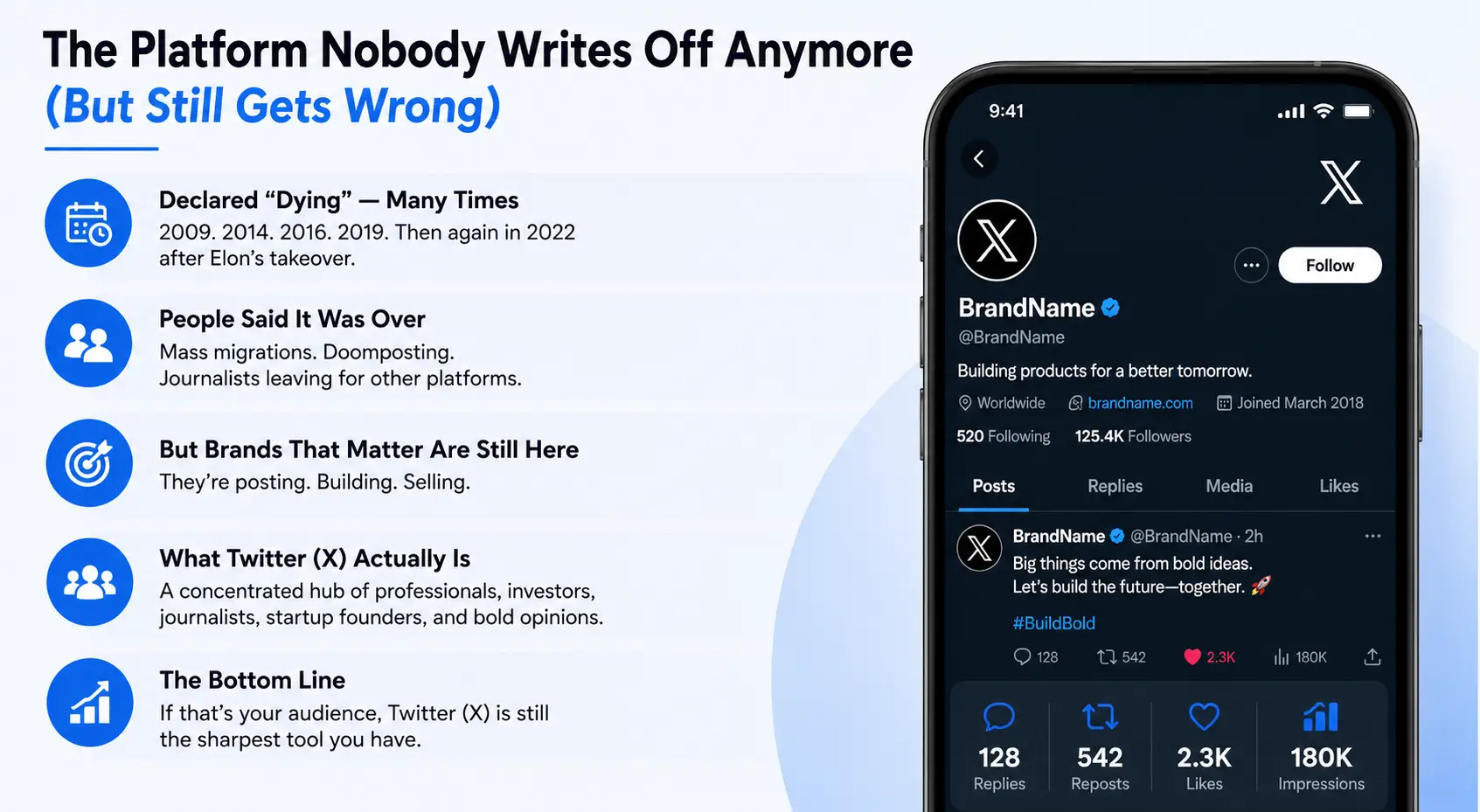
People have called Twitter “dying” so many times that we have stopped counting. 2009. 2014. 2016. 2019. Then Elon took over in 2022 and many said it was finished. There were mass migrations and doom posting, and journalists left for Threads or Bluesky.
And yet the brands that matter are still here, posting, building and selling.
Twitter works if you understand what it is now. It is no longer a mass-audience platform. It is a concentrated hub of professionals, investors, journalists, startup founders and people whose opinions are strong enough to share in public. If that is your audience, Twitter is still a sharp tool.
At PromotEdge, we help brands work out their Twitter strategy. Some do very well and some do not. The difference is rarely luck. It is understanding what works and, more importantly, what does not.
Is Twitter still relevant?
Short answer: it depends entirely on who you’re trying to reach.
A fashion e-commerce brand selling Rs 3,000 dresses? Twitter may not do much for it. An insurance company trying to reach CTOs and CFOs? You are in the right place. A fintech startup? Twitter may bring more qualified interest than Instagram does.
What matters here is engagement rate, not reach. A tweet that lands with the right professionals can do more for a B2B brand than a bigger audience on Facebook, and the people engaging are real, not bots pretending to be real.
Here is a made-up example. A logistics SaaS company targets operations managers and supply chain heads. Instagram may give it plenty of impressions and very few likes. Twitter may give it fewer impressions but more likes and leads from the right people. Draw your own conclusion. Platform selection is one of the most important decisions in any digital marketing strategy. The right choice depends on where your specific audience spends their time, not where you are most comfortable posting.
How to build an audience
Everyone says “post consistently and engage with others.” That is true. Here is what actually happens when you do:
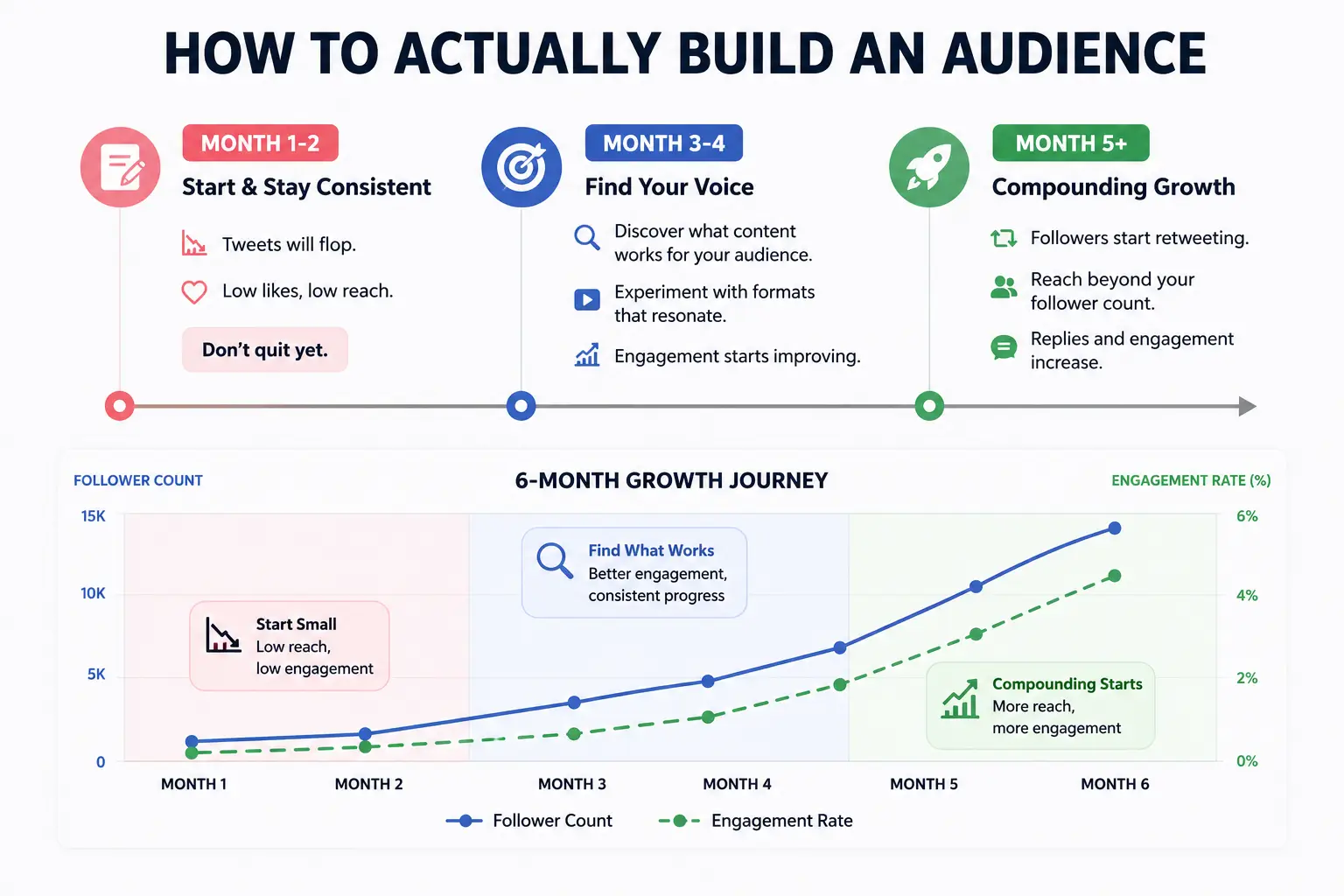
Month 1-2: Your tweets will flop
You post 20 tweets about your industry insights and get 3 likes, from your co-founder and someone’s mom. Don’t quit yet.
Month 3-4: You find your voice (or you don’t)
By now you have figured out what format works. Short takes? Long threads? Questions? Data? Video clips? A B2B manufacturing brand, for example, might get no traction until it starts posting behind-the-scenes factory footage. People in that industry want to see the actual process, not generic marketing speak.
Month 5+: Compounding starts
Your followers start retweeting. People outside your follower count see your posts. Replies increase. This is when Twitter becomes useful. Before this point it feels pointless, which is the biggest reason brands quit too early.
One key thing: engage authentically. Reply to people in your space, but not to 500 people a day, which is bot behaviour. If someone posts about a challenge you solve, reply. People notice when you genuinely take part and when you only broadcast.
Content that works
Inspirational quotes, stock photos of people with thumbs up and vague corporate speak no longer work. People scroll past them.
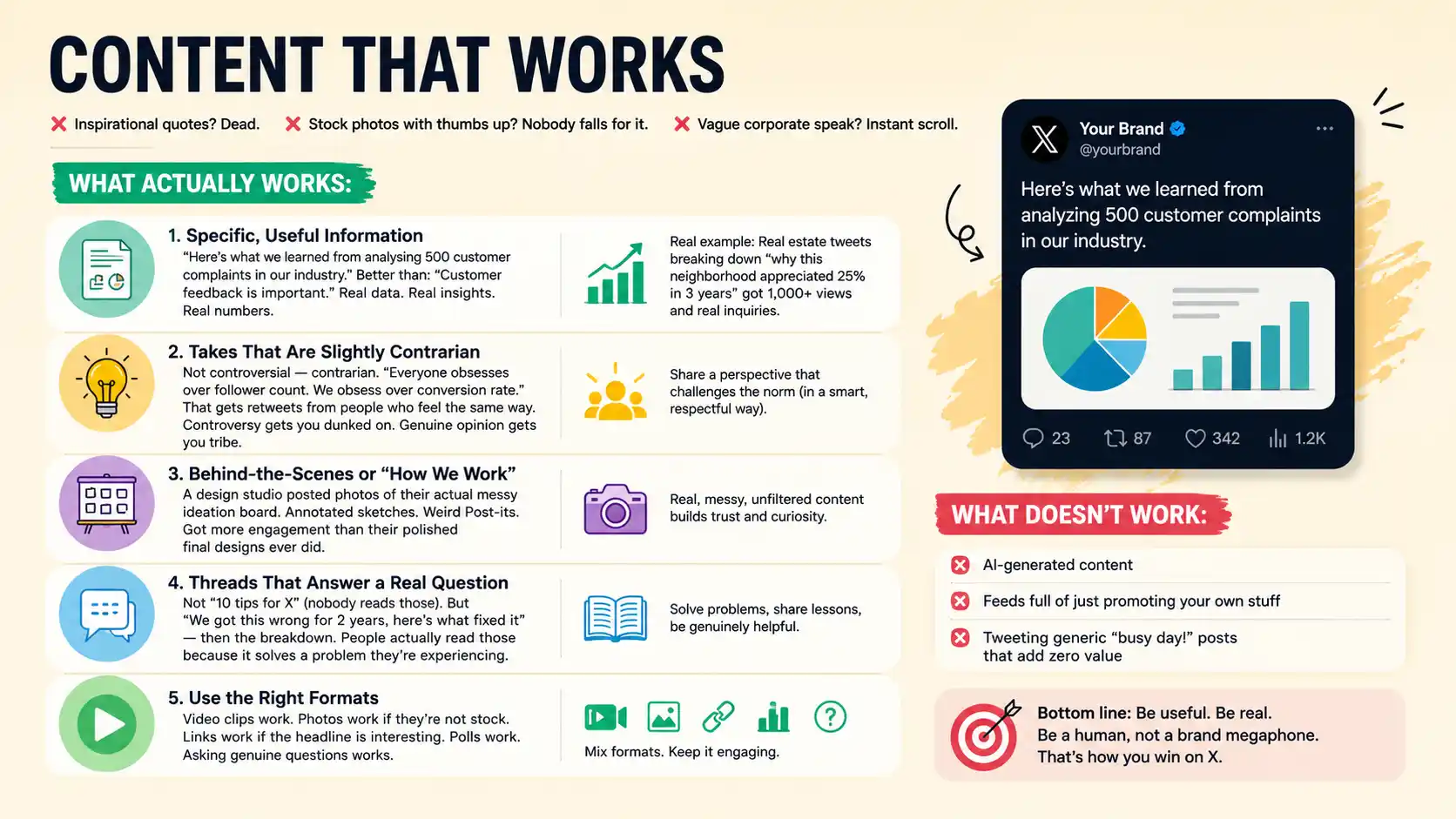
What works:
- Specific, useful information. “Here’s what we learned from analysing 500 customer complaints in our industry” beats “Customer feedback is important.” Share real data and real numbers. A real estate company, for example, could post a breakdown of why a neighbourhood’s prices rose, instead of glamour shots of properties. Serious inquiries tend to follow.
- Takes that are slightly contrarian, not controversial. “Everyone obsesses over follower count. We obsess over conversion rate.” That gets retweets from people who feel the same way. Controversy gets you dunked on. A genuine opinion gets you a tribe.
- Behind-the-scenes posts that show how you actually work. A design studio could post its messy ideation board, with annotated sketches and odd Post-its. That can get more engagement than polished final designs.
- Threads that answer a real question. Skip “10 tips for X”, because nobody reads those. Try “We got this wrong for 2 years, here’s what fixed it”, then the breakdown. People read those because they solve a problem they have.
- Video clips, photos that are not stock, links with an interesting headline, polls and genuine questions all work.
- What does not work: AI-generated content, feeds full of your own promotion, and generic “busy day” posts that add nothing.
Engagement: the part everyone skips
You post a tweet. Then what? Most brands go silent until tomorrow’s post.
Engagement means replying to comments within the first hour, asking follow-up questions and having real conversations. Say a fintech brand gets decent engagement but no leads, because it posts and never answers replies. The fix is to spend 30 minutes a day replying to every reply. Those conversations can turn into LinkedIn DMs and demos, and then customers.
This part needs a human. You cannot automate it, and it takes time. But if you are serious about Twitter ROI, this is where it lives.
Twitter ads: when and how to spend money
The platform makes money from ads, so of course you can run them. Should you?
If your organic engagement is solid and you want to speed things up, yes. If you have not found your organic voice yet, ads will only show mediocre content to a bigger audience.
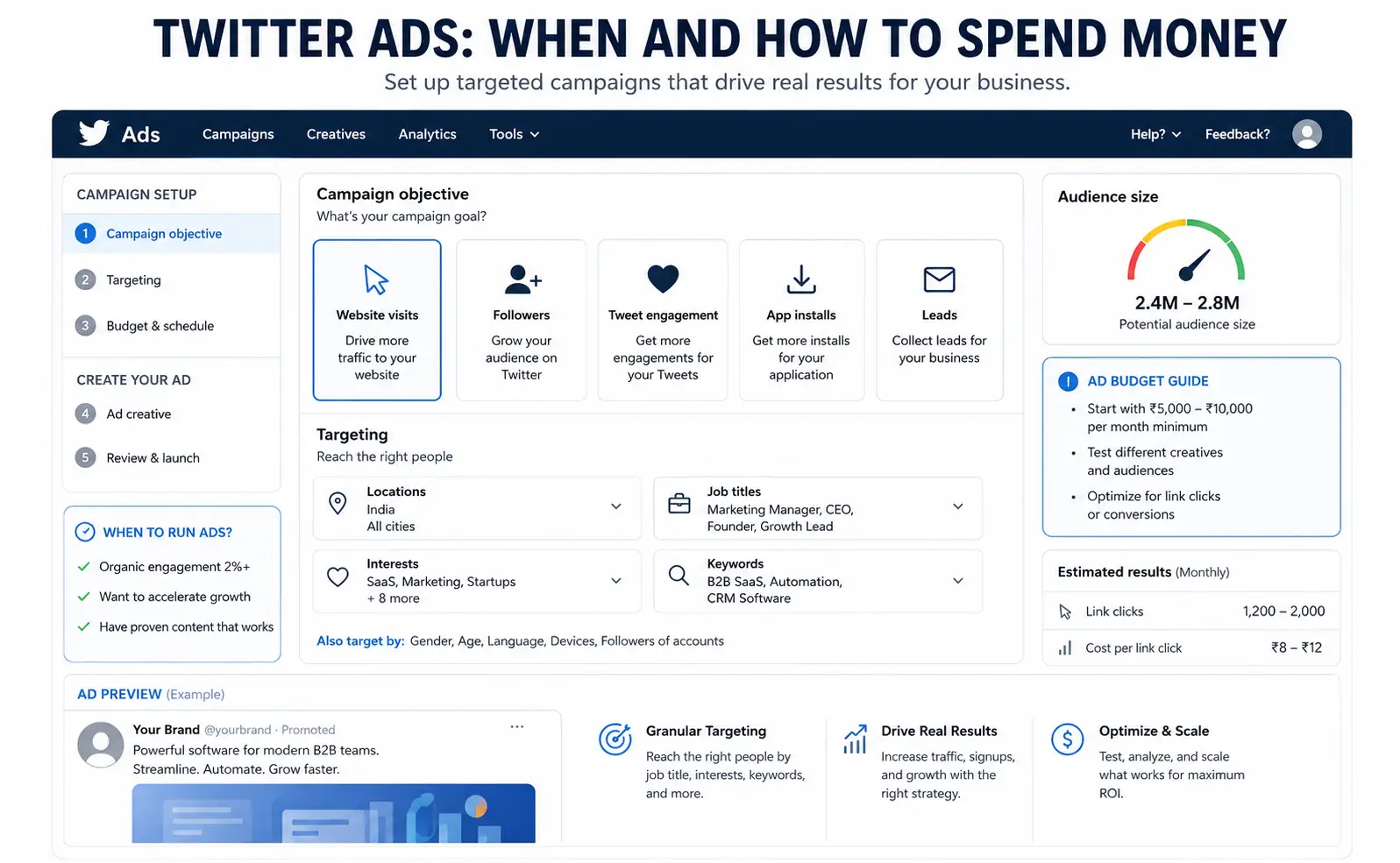
Twitter ads work best for:
- Promoting specific content (link clicks, visits)
- Growing followers quickly, which helps credibility if you are new
- Driving signups or trials for software and services
- Reaching specific job titles or interests in target regions
- Budget: start with at least Rs 5,000-10,000 a month to test properly. Below that you mostly burn money on platform fees. Ads convert much better when your landing page is good.
Targeting is granular: job titles, interests, keywords, followers of your competitors. You can be quite precise. But the creative still has to be good. A bad ad with perfect targeting is still a bad ad.
Analytics: what matters
Twitter’s analytics dashboard shows impressions, engagements, followers and retweets. Most of that is noise.
What matters: impressions (are you reaching people?), engagement rate (is it rising?), click-through rate if you drive traffic, and whether those people turn into leads or customers.
Many brands get obsessed with follower count. “We grew by 1,000 followers this month” sounds good, but not if it brought only 12 real leads. Focus on outcomes. That tells you whether Twitter is working or you are posting into a void.
We usually connect Twitter to email or a CRM (customer relationship management tool) to track which tweets drove visits, which visits became leads and which leads became customers. That is the metric that matters. Nobody cares about a tweet with 5,000 impressions that drove no revenue.
Mistakes we see often
These are common problems when brands try to improve their social media strategy and engagement.
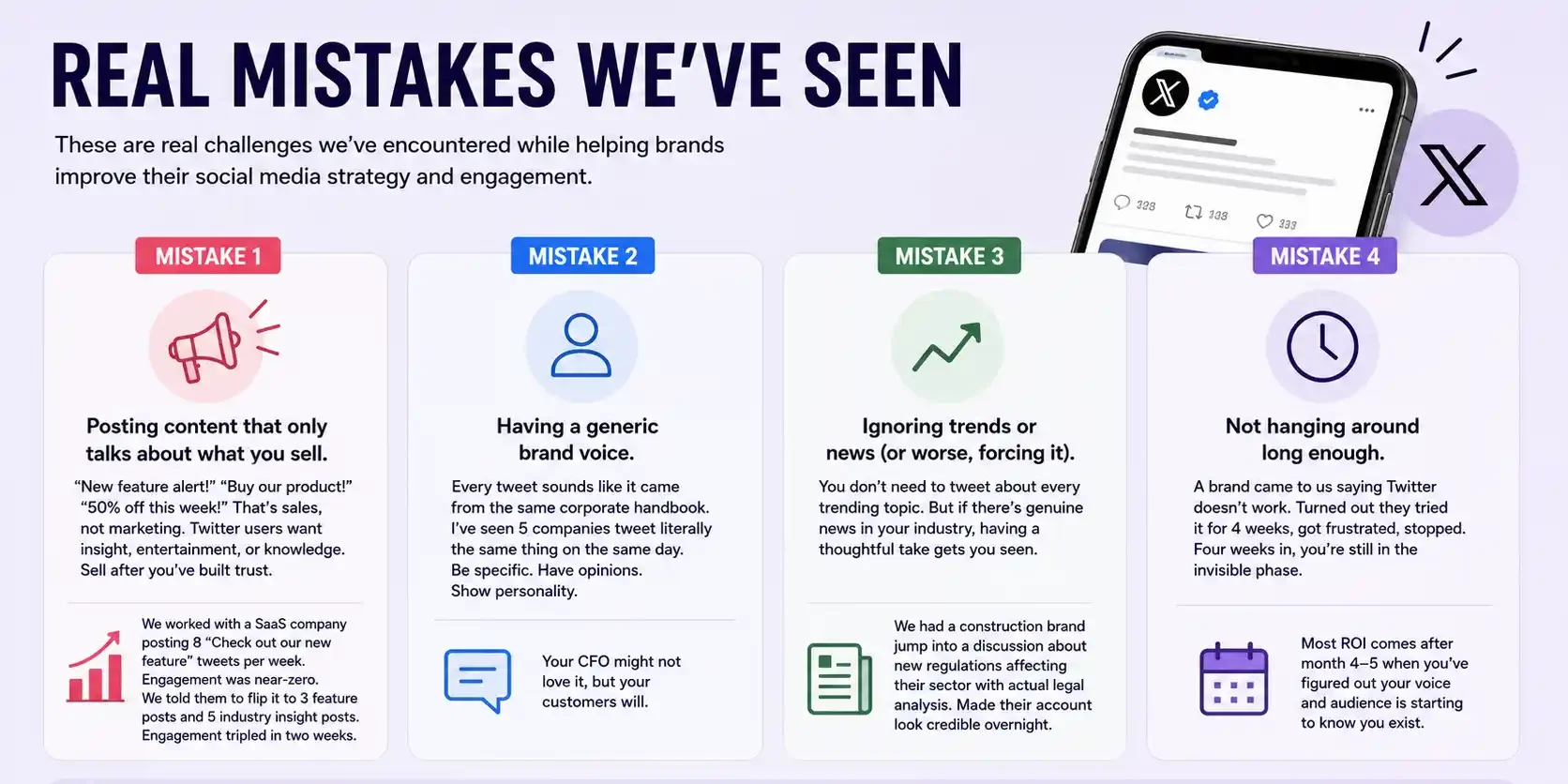
Mistake 1: Talking only about what you sell
Posting content that only talks about what you sell: “New feature alert”, “Buy our product”, “50% off this week”. That is sales, not marketing. Twitter users want insight, entertainment or knowledge. Sell after you have built trust. Say a SaaS company posts 8 “Check out our new feature” tweets a week and engagement is near zero. A better mix is 3 feature posts and 5 industry insight posts.
Mistake 2: A generic brand voice
Every tweet sounds like it came from the same corporate handbook. Be specific, have opinions and show personality. Your CFO might not love it, but your customers will. A distinct, consistent voice is what brand identity design sets up at the foundation. On Twitter, where every post competes for attention in a split second, that distinctiveness is the difference between being remembered and being scrolled past.
Mistake 3: Ignoring the news, or forcing it
You don’t need to tweet about every trending topic. But if there is genuine news in your industry, a thoughtful take gets you seen. A construction brand that joins a discussion on new regulations affecting its sector, with real legal analysis, can look credible quickly.
Mistake 4: Not staying long enough
Some brands say Twitter does not work after trying it for 4 weeks. At four weeks you are still in the invisible phase. Most of the return comes after month 4-5, once you have found your voice and the audience knows you exist.
A practical roadmap: what to do when
In month 1, set up your profile properly. Write a clear bio that says what you do, without jargon. Use a recognisable profile picture and a cover image that says something. Find your voice in 5-10 test tweets. Follow 100-200 relevant accounts. Don’t promote anything. Just observe and take part.
In month 2, post 3-5 times a week, mixing insights, takes and industry content. Engage genuinely with 30 other accounts’ tweets daily. You probably won’t get traction yet, and that is expected.
In month 3, one of your tweets will probably hit unexpectedly. Notice what made it work and do more of that. Keep posting and keep engaging.
From month 4, you have found what resonates. Posts get steadier engagement, and you get replies from people outside your follower base. This is when leads can start flowing, and when you could test Twitter ads if you want to speed things up.
Should you mix Twitter with other social channels?
Yes. Twitter should not be your only channel. Most brands need a mix: Twitter for authority and B2B reach, Instagram for awareness and product display, LinkedIn for professional positioning, and email for conversion.
At PromotEdge, we usually build integrated social media strategies where each platform has a role. Twitter builds awareness and authority, Instagram drives engagement and reach, and email drives sales. The channels feed each other: a Twitter insight becomes an email, and a product shown on Instagram gets discussed on Twitter.
Single-channel marketing rarely works well. Twitter is powerful, but it is strongest as part of a bigger picture.
Tools that help
You don’t need fancy tools to start. Twitter’s own posting and analytics tools work fine. If you want to schedule posts, create in batches or analyse better, tools like Buffer or Hootsuite help.
For content ideas, look at trending discussions in your space. For analytics, Twitter’s built-in dashboard is enough. For tracking engagement, spreadsheets work until you outgrow them. Content quality and consistency matter more than the tool.
Want help building your Twitter strategy?
We can help you work out your Twitter presence. Some brands find it pays off. Others find it is not their priority. Either way, you will know where you stand.


