
























The brand that thought 100,000 followers meant success
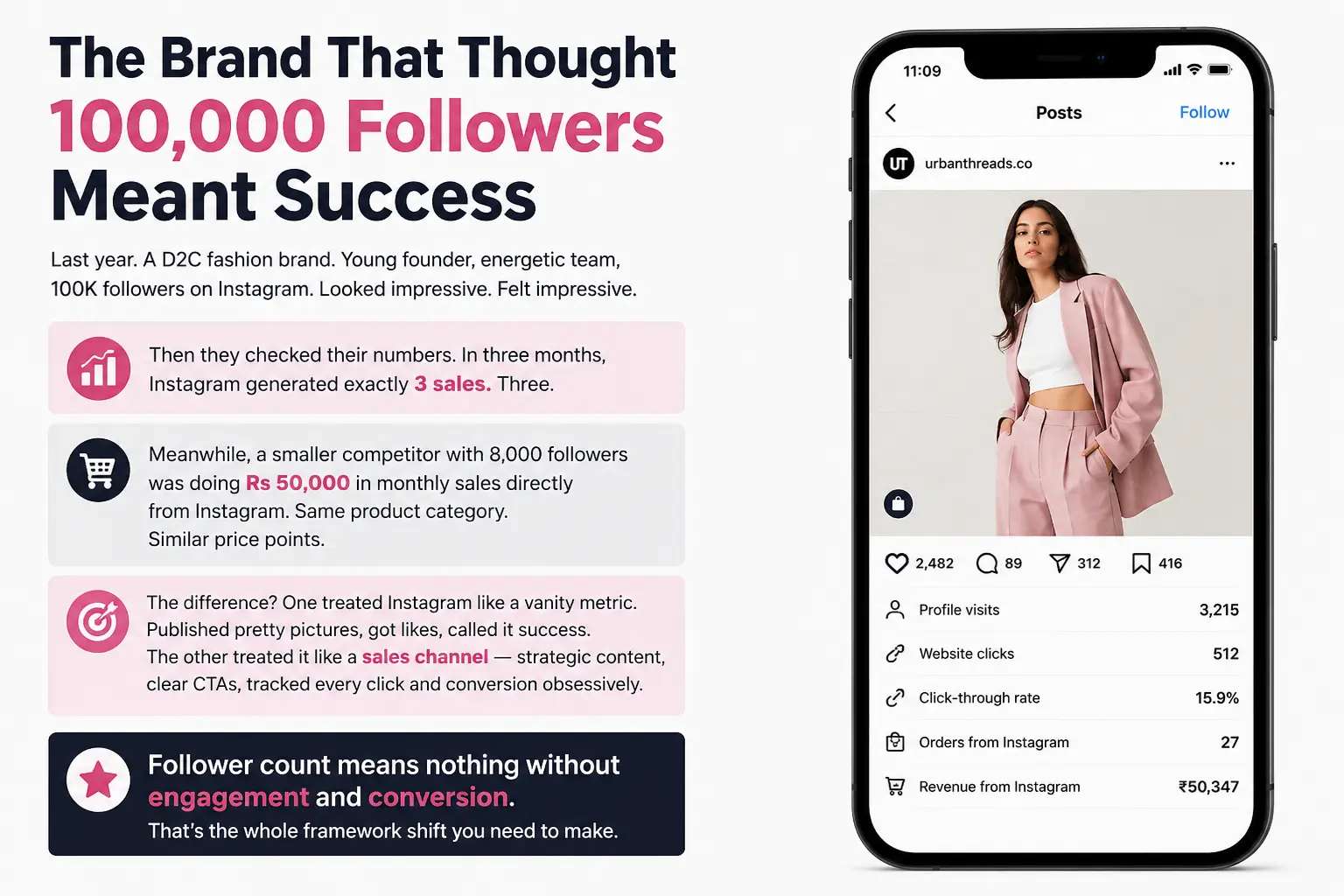
Here is a made-up example. A D2C (direct-to-consumer) fashion brand has a young founder, an energetic team and 100K followers on Instagram. It looks impressive, and it feels impressive.
Then they check their numbers. In three months, Instagram has generated exactly 3 sales.
Meanwhile, a smaller competitor with 8,000 followers does Rs 50,000 in monthly sales directly from Instagram. Same product category, similar price points.
The difference is in how they use Instagram. One treats it as a vanity metric: it publishes pretty pictures, gets likes and calls it success. The other treats it as a sales channel, with strategic content, clear CTAs (calls to action), and tracking of every click and conversion.
Follower count means little without engagement and conversion. That is the shift in thinking you need to make.
Why Instagram matters (and why most brands fail at it)
- Instagram is where your customers spend a lot of time every day in India. It’s where they discover products and get influenced. If you’re not there, competitors are.
- The algorithm rewards engagement, not follower count. Say you post something and 10,000 of your 100K followers see it. That’s 10% reach. So you need quality followers who actually engage, not fake numbers.
- Set up correctly, Instagram can drive D2C sales. This can work across beauty, fashion, home goods and food brands, if you execute.
- Most brands fail because they play vanity games instead of building conversion funnels. They post for likes instead of setting up swipe-ups and links properly. They don’t measure, they just hope. If you’re serious about results, a structured digital marketing strategy is what separates brands that grow from brands that stall.
The Instagram algorithm in human terms
Instagram’s algorithm prioritises engagement: how many people saved, shared and commented on your post, and how long they watched your Reel. If people engage, the algorithm shows your content to more people. It is a simple loop.
It penalises links to external websites. Instagram wants people on Instagram, not leaving. So a direct link in a caption won’t go far. But links in stories, links in bio and DM campaigns work better.
Consistency matters. Post regularly, because sporadic posting tends to get throttled. Steady wins.
Account health matters. Older accounts with a steady history of engagement get preference over new accounts. This is why buying followers backfires. Fake followers destroy engagement rates.
The content types that actually sell
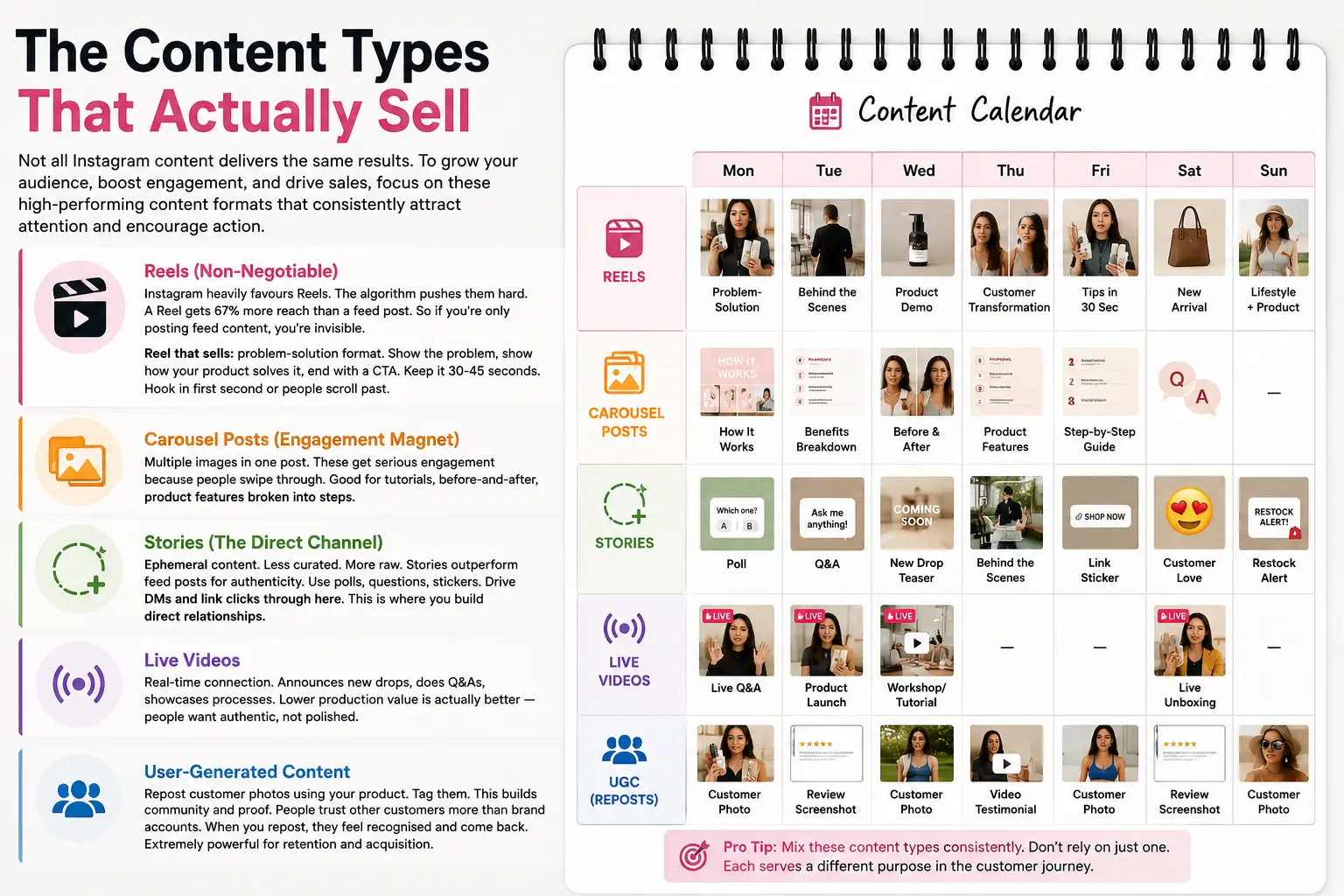
Not all Instagram content delivers the same results. To grow your audience, improve engagement and drive sales, focus on these content formats.
Reels (non-negotiable)
Instagram favours Reels. A Reel often gets more reach than a feed post, so if you only post feed content, you are easy to miss.
A Reel that sells follows a problem-solution format. Show the problem, show how your product solves it, and end with a CTA. Keep it 30-45 seconds. Hook people in the first second or they scroll past. The rise of short-form video content has made this format a must for brands in every category.
Carousel posts
A carousel is multiple images in one post. It gets strong engagement because people swipe through. It is good for tutorials, before-and-after shots, and product features broken into steps.
Stories (the direct channel)
Stories are short-lived and less curated, so they feel more authentic than feed posts. Use polls, questions and stickers, and drive DMs and link clicks from here. This is where you build direct relationships.
Live Videos
Live video gives you a real-time connection. Use it to announce new drops, run Q&As and show your processes. Lower production value often works better. People want authentic, not polished. If you want to go further with video, working with a corporate video production team can improve how your brand shows up across formats.
User-Generated Content
Repost customer photos using your product. Tag them. This builds community and proof. People trust other customers more than brand accounts. When you repost, they feel recognised and come back. It helps with both retention and acquisition.
Building an Instagram strategy that converts
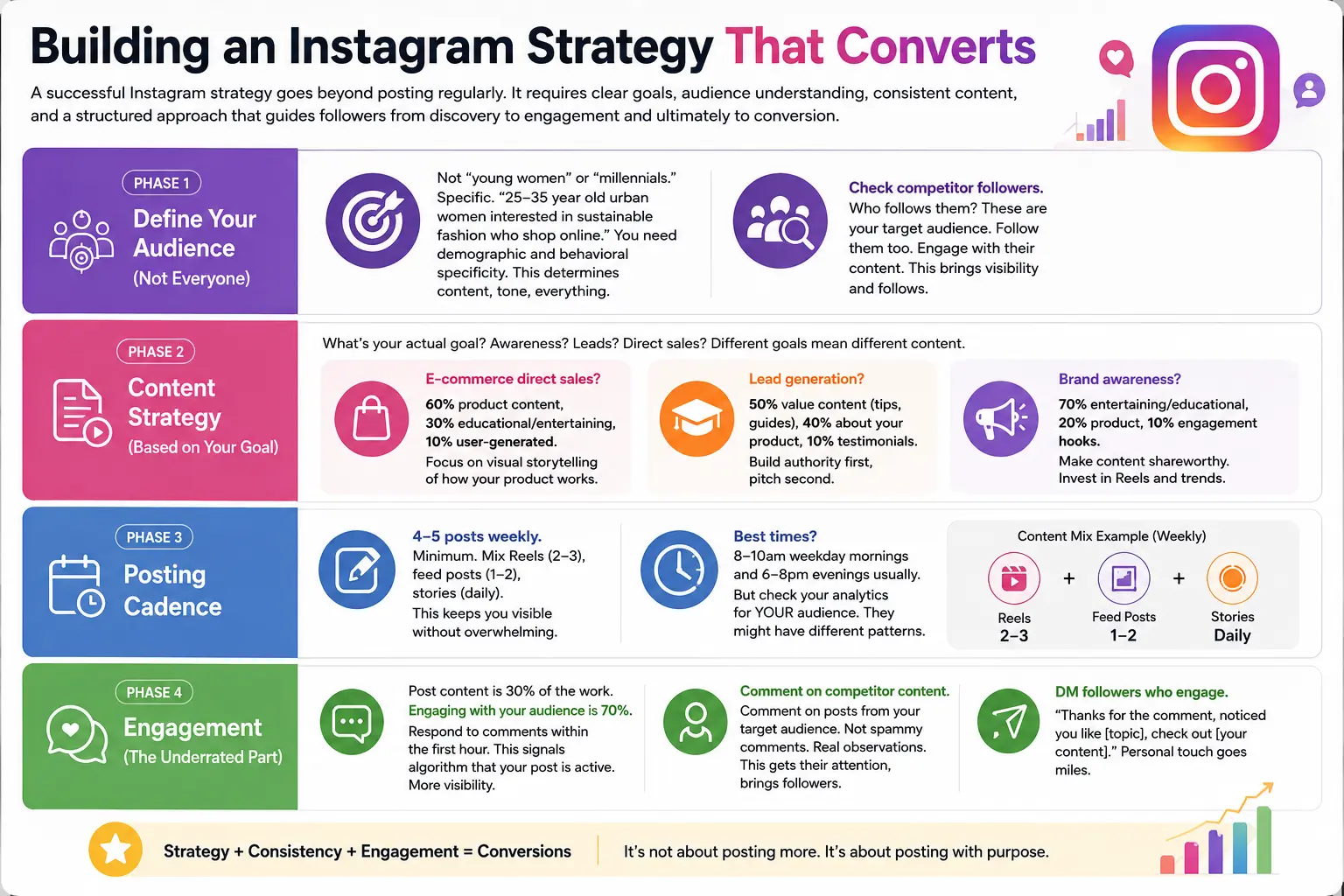
A good Instagram strategy needs more than regular posting. It needs clear goals and an understanding of your audience. It needs consistent content. It also needs a structure that guides followers from discovery to engagement to conversion.
Phase 1: Define your audience (not everyone)
Don’t say “young women” or “millennials.” Be specific: “25-35 year old urban women interested in sustainable fashion who shop online.” You need demographic and behavioural specificity. This shapes your content, tone and everything else.
Check competitor followers. Who follows them? These people are your target audience. Follow them and engage with their content. This brings visibility and follows.
Phase 2: Content strategy (based on your goal)
What’s your actual goal: awareness, leads or direct sales? Different goals mean different content.
E-commerce direct sales? 60% product content, 30% educational/entertaining, 10% user-generated. Focus on visual storytelling of how your product works.
Lead generation? 50% value content (tips, guides), 40% about your product, 10% testimonials. Build authority first, pitch second.
Brand awareness? 70% entertaining/educational, 20% product, 10% engagement hooks. Make content shareworthy. Invest in Reels and trends.
Phase 3: Posting cadence
Aim for at least 4-5 posts a week. Mix Reels (2-3), feed posts (1-2) and stories (daily). This keeps you visible without overwhelming people.
Weekday mornings and evenings often work well, but check your analytics for your own audience. They may have different patterns.
Phase 4: Engagement (the underrated part)
Posting content is only part of the work. Engaging with your audience is just as important. Respond to comments within the first hour. This signals to the algorithm that your post is active, which can mean more visibility.
Comment on competitor content and on posts from your target audience. Skip spammy comments and make real observations. This gets their attention and brings followers.
DM followers who engage, for example: “Thanks for the comment, noticed you like [topic], check out [your content].” A personal touch goes a long way. Our guide on social media marketing benefits for businesses covers why this engagement-first approach beats broadcast-only strategies.
The Instagram ads that actually work
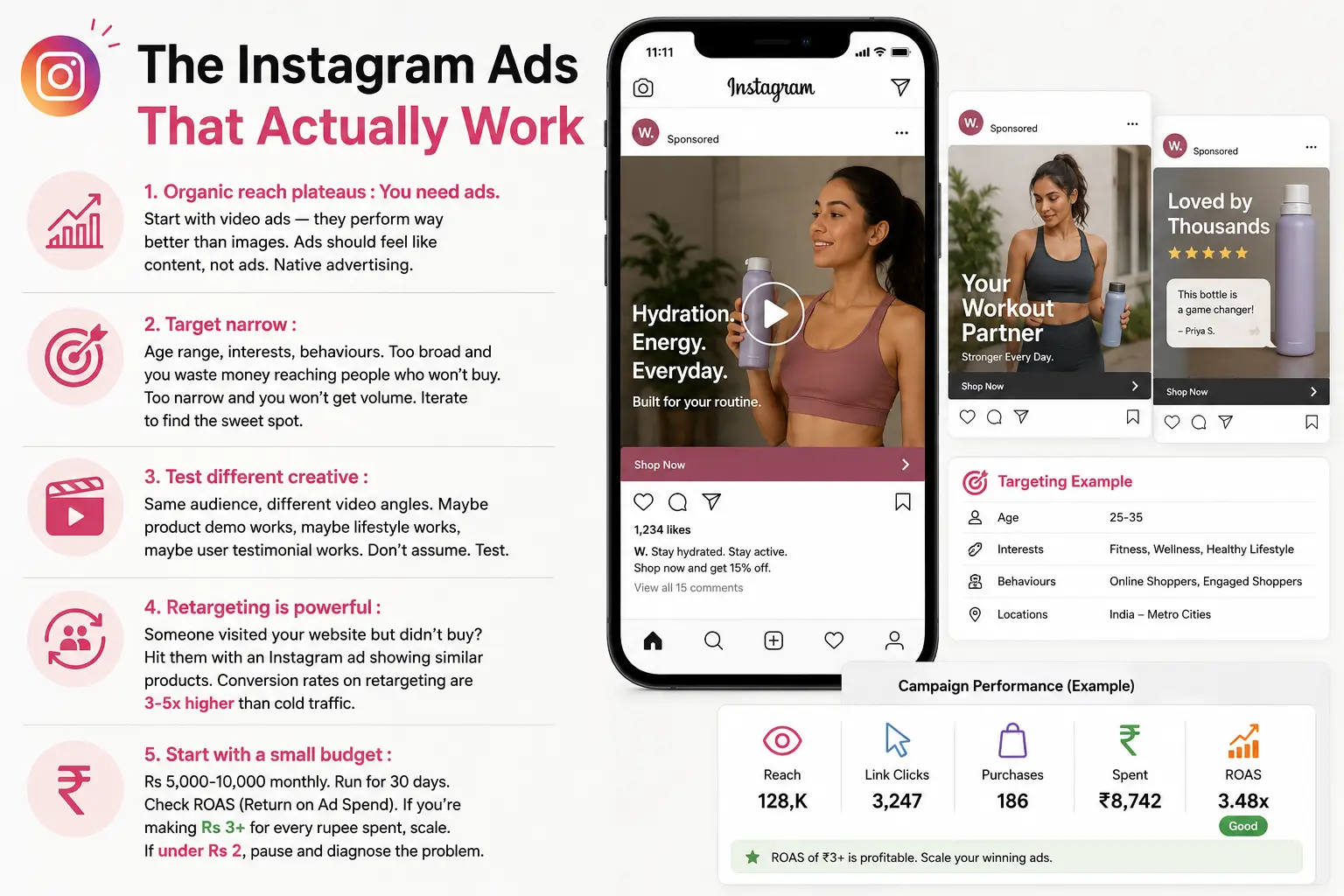
- Organic reach plateaus, so you need ads. Start with video ads, which tend to perform better than images. Ads should feel like content, not ads. This is native advertising.
- Target a narrow audience by age range, interests and behaviours. Too broad and you waste money reaching people who won’t buy. Too narrow and you won’t get volume. Iterate to find the sweet spot.
- Test different creative with the same audience and different video angles. Maybe a product demo works, maybe lifestyle works, maybe a user testimonial works. Don’t assume. Test.
- Retarget visitors who didn’t buy. Show them an Instagram ad with similar products. Retargeting usually converts better than cold traffic.
- Start with a small budget of Rs 5,000-10,000 monthly. Run for 30 days. Check ROAS (Return on Ad Spend). If you’re making Rs 3+ for every rupee spent, scale. If under Rs 2, pause and diagnose the problem.
Measuring what actually matters
- Likes are vanity. Engagement rate and reach matter, but conversions and revenue matter most.
- Set up proper tracking. Add UTM parameters to your Instagram links. Then you can track which content drives traffic to your website, which links get clicks, and which clicks convert to customers.
- Use Instagram’s built-in tools. Insights show reach, impressions, engagement, audience demographics and peak activity times. Learn to read this data. It is the roadmap for improvement.
- Track from signup to purchase. “This Reel drove 500 clicks, of which 20 signed up, of which 5 purchased” is the full funnel. Most brands only look at one part.
- Calculate CAC (customer acquisition cost). How much did you spend on ads and content to get one customer? Is it profitable? If CAC is Rs 2,000 and average order value is Rs 1,500, you’re losing money. Fix it.
Retargeting is closely related to remarketing vs retargeting. Understanding the difference helps you spend your budget more wisely.
Common Instagram mistakes you may be making
- Buying followers kills real engagement. New accounts with zero activity follow you, the algorithm sees it, and your reach is throttled. Genuine followers always beat fake numbers.
- Posting inconsistently, with months of silence and then daily posts, makes the algorithm see you as inactive. It takes time to rebuild trust.
- Not using Stories. Stories are where your engaged followers live: direct, personal and frequent. Brands that skip Stories miss the most direct channel.
- Focusing on vanity metrics. “We got 1,000 likes” is meaningless. “We got 50 clicks and 5 sales” is meaningful. Shift your mindset from likes to revenue.
- Copying a competitor’s strategy exactly. It works for them because of their audience, history and brand. You need your own approach. Study them for inspiration, not duplication.
Getting started
First, audit your current Instagram. Look at engagement rate, follower growth and top-performing posts. What’s working? Do more. What’s flopping? Cut it or redesign it.
Second, define your ideal customer and write it down: demographics, behaviours, where they hang out and what problems they have. This is your target.
Third, plan a month of content. Mix Reels, carousels, feed posts and stories, matched to your goal (sales, awareness or leads). Schedule it.
Fourth, start engaging. Spend at least 30 minutes daily on comments, DMs and following. Don’t just broadcast.
Fifth, measure everything: clicks, conversions and revenue. After 30 days, you’ll know what’s working. Double down on that.
Sixth, iterate. Small changes compound. Test one thing weekly and track the results. Small improvements over months add up to big growth.
The real Instagram opportunity
Instagram is a sales channel, and brands that treat it that way build real business. Build the brand first and the sales follow. Think long-term community, short-term conversions.
Do you want an Instagram strategy that actually drives revenue? You may be starting from zero. You may be optimising what you’re already doing. Either way, let’s talk. We build Instagram strategies for D2C and e-commerce brands.
Turn Instagram into a sales channel
We build Instagram strategies for brands, from zero followers to consistent revenue. We cover strategy, execution and measurement.


