
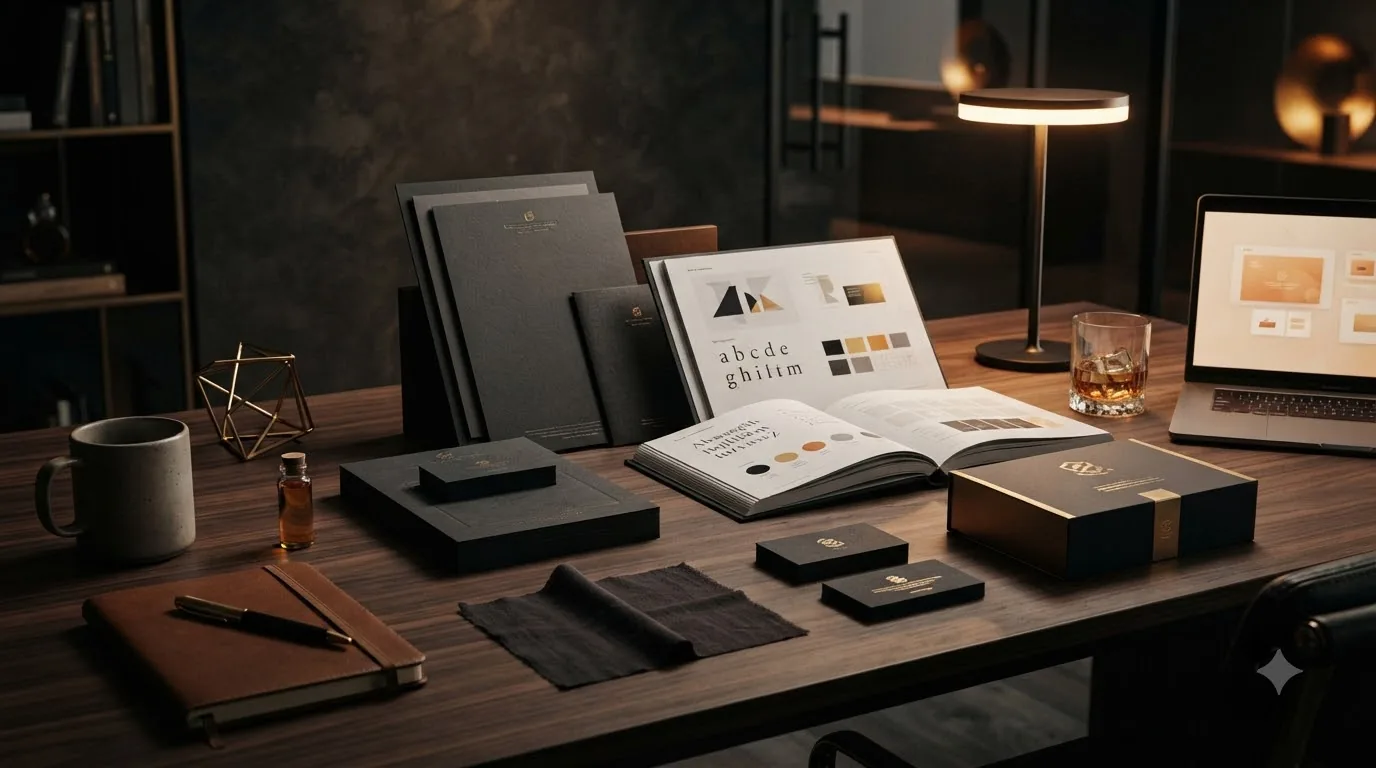
























How logos get quoted
- A fixed fee for a logo with a set number of routes and rounds of changes.
- A package that bundles the logo with a full brand identity: colours, fonts, stationery and a guide.
- A contest or marketplace, where many designers submit ideas and you pick one.
- A freelancer or small studio, charging by project.
- An agency, which may bundle research and strategy with the logo.
Cheaper routes may give you less research, fewer rounds and less checking. A contest can give you many ideas, but check ownership and originality carefully. A bigger project makes sense when the logo must carry a whole brand.
What moves the cost
- Who does the work: a beginner, a senior designer or a team.
- Depth of research into your market and rivals.
- Number of design routes and rounds of changes.
- Whether you need a whole identity or only a mark.
- Number of files and versions, such as a one-colour version or an icon.
- Rights you want: a written assignment of the design rights, not just permission to use it.
- Speed. A rushed project leaves less time to think.
These are our own observations from client work, not a pricing formula.
A made-up example
Say two quotes arrive for a new restaurant's logo. Quote A is a single design from a template, delivered as an image, with no assignment. Quote B has research, three routes, original files, a one-page guide and a signed assignment. B costs more, but A may leave the restaurant unable to print a sign or register the name. Compare what is included. The example is made up.
Who owns your logo?
This is the step many people skip. Under the Copyright Act, 1957, the author of a work is generally its first owner. The law gives first ownership to the person who commissions certain works made for payment, such as a photograph, painting, portrait, engraving or film. Do not assume a logo falls in that group.
To own the design, get a written assignment signed by the designer. Section 19 of the Act says an assignment is valid only if it is in writing and signed. It must identify the work, the rights and the duration and territory. If the duration is left out, the law deems it five years. If the territory is left out, it is presumed to be India.
So write it in: the logo, all rights, no time limit and the territories you need. Ask a lawyer to check the wording. This is general information, not legal advice.
What registering a trade mark costs
A logo that you want to protect as a brand can be registered as a trade mark. IP India lists the fee in the First Schedule of the Trade Marks Rules, 2017. We read it on 9 October 2026.
- Individual, startup or small enterprise: ₹4,500 when e-filed, ₹5,000 when filed on paper.
- All other applicants: ₹9,000 when e-filed, ₹10,000 when filed on paper.
The fee is for each class and each mark. A class is a category of goods or services. Startups and small enterprises must give the requisite certificate. Fees can change, so check IP India before you pay. This is the official fee only. A lawyer or agent may charge separately.
Questions to ask before you sign
- What exactly is included: routes, rounds, files and a guide?
- Is the design original, and how do you check it is not copied?
- Will you sign a written assignment of the rights to me?
- Do I get editable original files?
- How long will it take?
- What is extra, such as business cards, packaging or social images?
We start with a free 30-minute call with a strategist, then a one-page plan, and we send the quote within 2 working days.
Red flags in a logo quote
- A price so low that research and rounds are quietly left out.
- No written assignment of rights.
- Only an image file, with no editable original.
- Stock art or a template sold as a custom logo.
- No check that the design is not already used by someone else.
To see how we design, read about our logo design service. For the wider bill, see our guide to digital marketing cost in India.


