
























What is in the sheet
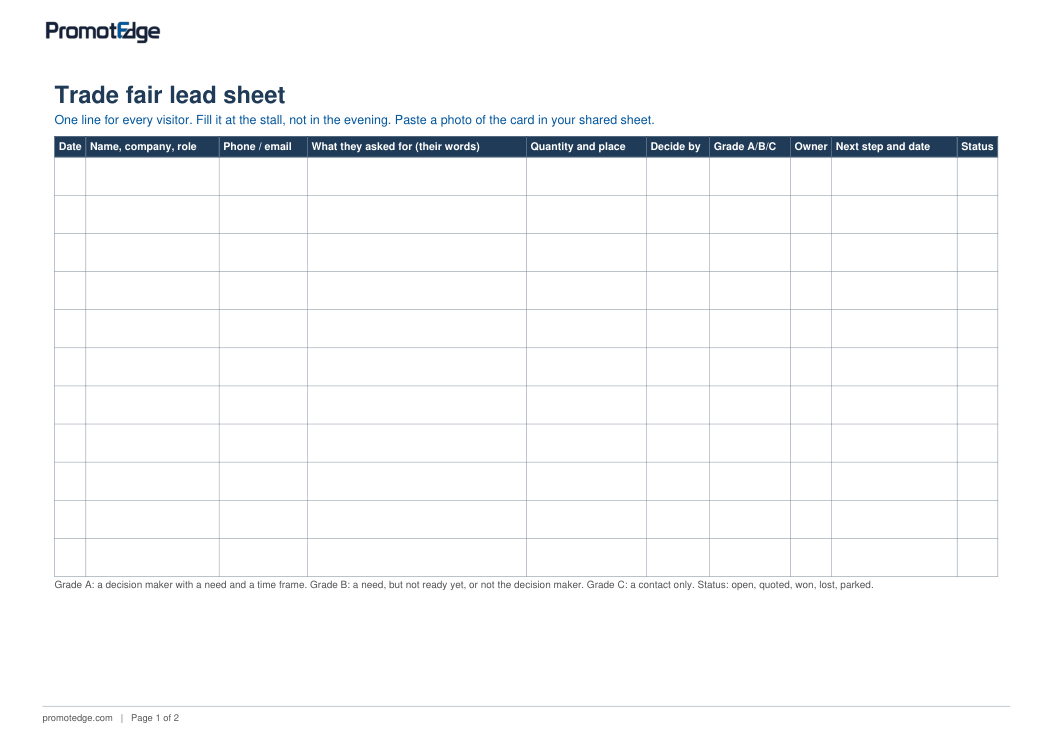
Page one is a table with ten columns: date, name and company and role, phone or email, what they asked for in their words, quantity and place, when they will decide, the grade, the owner, the next step with a date and the status. Keep one sheet for the whole team so nothing sits in a bag of visiting cards.
How to grade a lead
- Grade A: a decision maker with a need and a time frame.
- Grade B: a need, but not ready yet, or not the decision maker.
- Grade C: a contact only.
Grade at the stall, because memory fades by evening. Three questions help: what do you use today, what problem do you want to fix, and when do you plan to decide?
How to use the plan on page two
- Set the owner for every lead and fix the review dates before the fair.
- On the same evening, enter every card in the sheet with its grade.
- On day one or two, call every grade A lead and send grade B leads something useful.
- On days 7, 14 and 30, follow the plan for each grade.
- Park a lead after three real tries without a reply. Keep parked leads, and write to them only if they agreed to be contacted.
- At 90 and 180 days, fill in the table of numbers at the end of page two.
What to count
Count leads by grade, replies within two days, meetings or visits, quotes sent, quotes still open, orders won and the cost of the fair. Return is the margin earned on orders won, minus the total cost of the fair, divided by the total cost. Keep quotes still open as a separate line.
The reasons behind each step are in our field notes on trade fair follow-up for industrial buyers. Our guide on trade show marketing and return on spend covers the fair itself.