
Are you a realtor or a marketing enthusiast? For more real estate marketing ideas to test, see our digital marketing for real estate page. What are the best real estate marketing strategies? Start with a website that loads fast on a phone, search and local listings, honest content, site-visit follow-ups tracked in a CRM, and ads that follow the RERA rules. Pick the few that suit your buyer and budget, test each, and keep the ones that bring site visits. (PromotEdge, 6 November 2026.) Here are 15 marketing strategies. They help agencies stay in the game and get results. Trends and customer habits keep changing, so this matters.
Check the rules before you run any property ad in India. RERA, the real estate law, says a project must be registered before you advertise or sell it. The ad must clearly show the project's registration number and the state authority's website address, which holds the project's details. Each state authority adds its own display rules. Check yours.
1. Website design and development
Many people judge a business by its website. Real estate is a customer-focused industry. So treat your website as a 24/7 open house, a digital storefront and a way to build trust. It should have a clear design, an easy menu and a prominent call to action. Then visitors turn into enquiries.
Show the RERA number and website address on your website too. Keep every claim true. Ads must be based on the facts you gave the authority. Do not exaggerate. Stick to facts you can show. Location and approvals are good examples. According to the Andhra Pradesh RERA page, a buyer harmed by a false statement in an ad can withdraw and get the money back with interest. Check your own state authority's page. For what each state authority asks of an ad, see our guide to RERA advertising rules.
2. SEO for the website
A real estate website should do more than exist. Do on-page SEO (search engine optimisation) to improve the user experience. This attracts high-intent visitors and generates leads. Add off-page SEO to build domain authority. Add technical SEO to fix broken links and speed up the site.
3. Strategic content creation
Content for real estate marketing is storytelling that turns a "house" into a "dream house". From informative blogs to videos of the property, good-looking content can attract and educate clients. It keeps them interested. Agencies that want to stay on customers' minds know this. Content builds a long-term bond and a positive brand image.
4. Audio-visual content production
A picture is worth a thousand words. In digital marketing for a real estate business it can be worth much more. Impressive images are a good way to draw people to open houses. Hire professional videographers and photographers. They can capture the property in images and walk-through videos. Every realtor should do this.
5. Drone shots and virtual tours
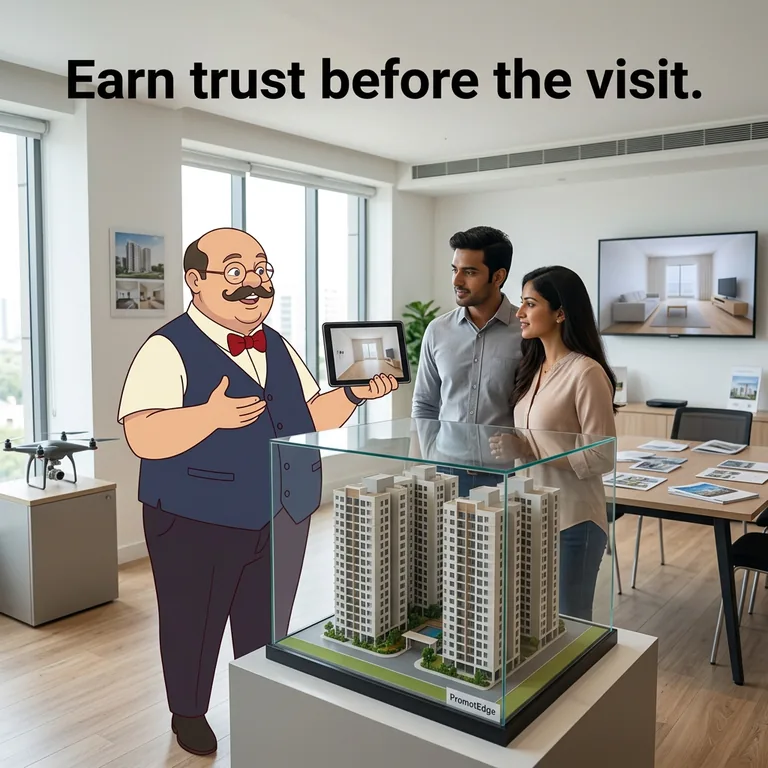
Why stop at images and walk-throughs for high-intent visitors? Seeing is believing, and drone shots and virtual tours take that further. Drones can capture sharp aerial images. They can show nearby amenities. They also cover more distance than a normal camera view. With a virtual tour, buyers can explore every corner of the property from home.
You may like: 5 Ways Digital Marketing Will Revolutionize Real Estate Industry
6. Know your target audience
Targeted advertising means aiming at a niche audience instead of casting a wide net. You cannot sell a luxury home to middle-income buyers who want affordable housing. Old-style marketing could not do this well. Digital marketing lets you aim at people by their interests. It also lets you aim at the kind of deals people want.
7. Use analytics and insights
Review your plan often. Do more of what works. Drop what does not. Use a tool like Google Analytics to track visits and enquiries. Also see what people do on the site. This matters for lead generation. It also helps improve ROI (return on investment).
8. Use CRM software and chatbots
A data-driven CRM (customer relationship management) tool helps a real estate business manage each step. It covers the path from lead to sale. A chatbot on the website works around the clock. It helps with generating and nurturing leads. Chatbots and CRM tools also help you reply to the many enquiries potential customers send.
9. Lead nurturing with marketing automation tools
Real estate deals take time. Leads may not be ready to buy or sell right away. Marketing automation nurtures these leads over time. It sends relevant information and updates until they are ready to buy.
10. Social media marketing
Platforms like Facebook and Instagram can turn likes into keys to a dream property. Social media is also a stage for real estate. Sellers can show their properties there. That reaches niche customers. Facebook helps build customer relations. Instagram suits getting new customers. YouTube works well for property videos.
11. Pay-per-click (PPC) marketing
When planning digital marketing for real estate, agencies take a careful approach to PPC advertising. It needs skill in setting campaign goals, researching keywords, writing ad copy and design, and bidding with a PPC budget. A good mix of SEO and PPC lets realtors microtarget and lift conversion rates. They then reach their goals faster.
12. Email marketing campaigns
Grow an email list through opt-ins and run email campaigns. This puts selling chances right in the customer's inbox. Email groups based on a customer's earlier interests make it more likely that you stay on their mind.
13. Listings on real estate websites
This is the digital version of planting a "for sale" sign. Be where buyers are searching. A Google Business profile can work as a second homepage for your business. So can listings on other real estate websites. They help with local SEO. They also make it easier for buyers to find you.
14. Let satisfied clients do the talking
Client testimonials on your website and positive Google reviews show that a real estate business can be trusted. A testimonial is the story of someone who trusted the business. They found their dream home or office plot. Happy clients can vouch for the skill and care of the business.
15. Real estate events, hoardings and marketing collaterals
Events like open houses and property tours add a personal touch. They also give you a chance to show your skill. Hoardings placed well are a constant reminder that properties are nearby. Marketing collaterals (printed material and brand swag) are a real reminder of the brand. The key facts on them quickly tell customers what you offer.
Plan a festive campaign around a site-visit day. Give buyers one clear next step, like booking a visit slot. Say each offer exactly as it applies to the project. Use the same words in every ad. Show the RERA number and website address on every poster and video. Add them to the landing page too.
Conclusion
Use digital marketing. Keep the older methods that still work. Events and hoardings still do. Watch how buyers behave. Drop what does not bring enquiries. Aim at a narrow group of buyers. That way more leads turn into site visits and sales. Keep every ad true and show the RERA details. Steady work over months builds a plan that brings better leads.
Sources
- Andhra Pradesh Real Estate Regulatory Authority (APRERA), October 2026 | https://rera.ap.gov.in/RERA/Views/AdvertisementGuidelines.aspx Source: Haryana Real Estate Regulatory Authority, Gurugram, October 2026: haryanarera.gov.in