-
Author: Anindita Barik
-
Updated Date: May-28-2026
-
Views: 2 Min Read
Video marketing success depends on strategy, not production value. This guide covers the video formats that drive real results — Reels, YouTube, demos, and testimonials — along with a proven production process, SEO and ranking tactics, and the most common mistakes brands make. Whether you’re starting from zero or fixing what’s not working, learn how to create videos that capture attention, build trust, and convert viewers into customers — consistently and cost-effectively.
A successful video marketing strategy is about creating content that captures attention, engages your audience, and supports your business goals. Instead of posting videos randomly, focus on understanding your audience, choosing the right platforms, and delivering content that provides value. From educational videos and product showcases to customer stories and short-form content, the right mix can help increase brand visibility, build trust, and drive meaningful results. Regular performance tracking and optimization ensure your video efforts continue to generate engagement, leads, and long-term growth.
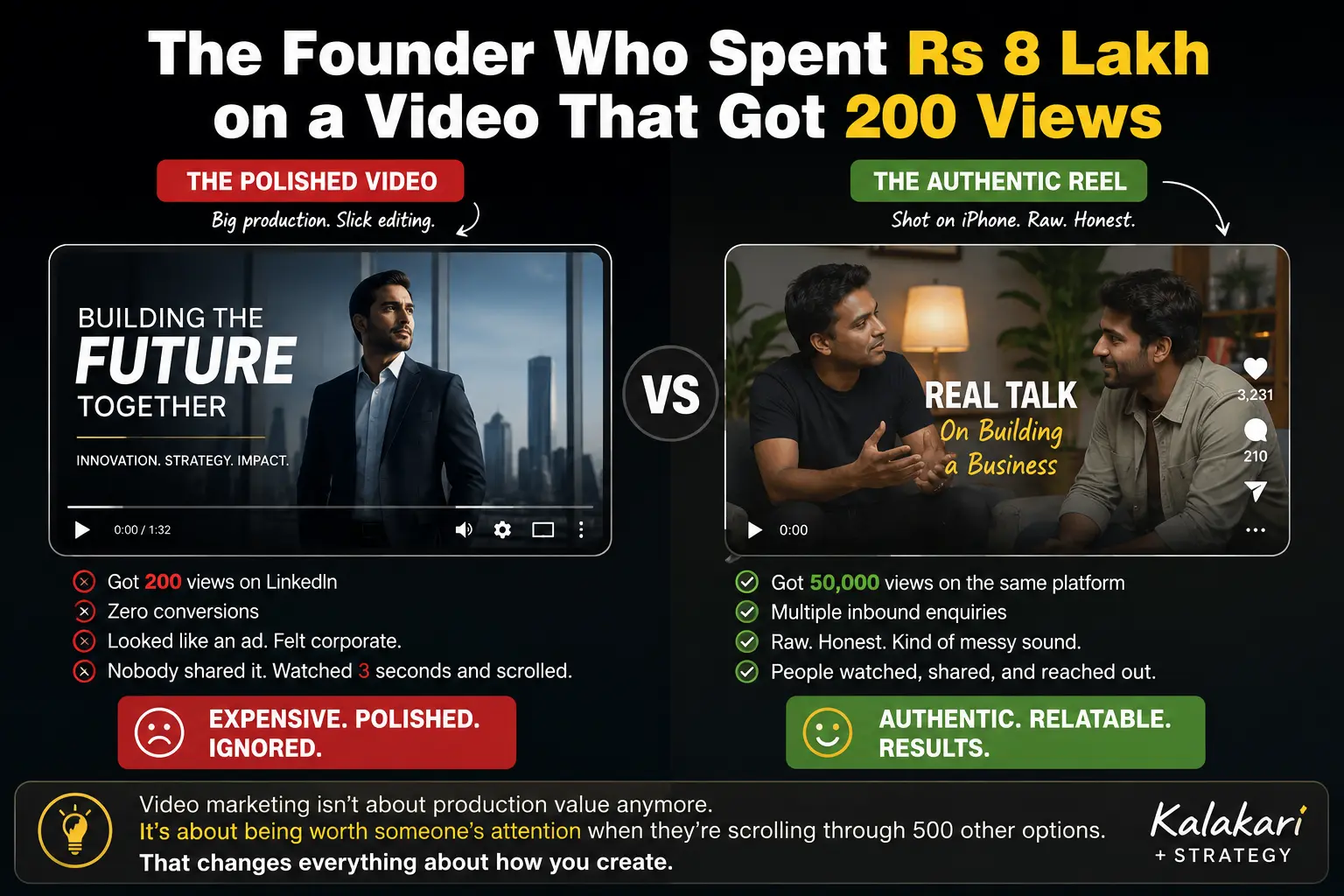
The Founder Who Spent Rs 8 Lakh on a Video That Got 200 Views
We’ve all met this person. Big production. Slick editing. Excellent sound design. Professional actors. The kind of video that wins awards at ad festivals.
Got 200 views on LinkedIn. Zero conversions. Founder asked us why.
Answer: because it looked like an ad. Felt corporate. Nobody shared it. People watched 3 seconds and scrolled.
Then we saw the same founder’s Reel six months later. Shot on iPhone. Two people talking. Raw. Honest. Kind of messy sound. Kalakari + Strategy applied differently here — less polish, more personality.
That Reel got 50,000 views. Multiple inbound enquiries. Same founder, different approach.
Video marketing isn’t about production value anymore. It’s about being worth someone’s attention when they’re scrolling through 500 other options. That changes everything about how you create.
Why Video Is Non-Negotiable Now
2019? You could survive without video. 2024? Risky. 2026? Video is where 60-70% of internet traffic comes. If your brand isn’t on video, potential customers probably assume you don’t exist or you’re not serious.
Google ranks video content. YouTube is second-largest search engine after Google itself. Instagram and Facebook’s algorithm heavily favours video. TikTok is… basically all video.
From a pure business angle: video drives more engagement, more shares, more leads than any other content format. We’ve tested this. Blog posts? 50-100 shares typical for good content. A video of the same topic? 500-1,000 shares, sometimes more. That’s the difference between invisibility and reach.
The barrier to entry is also gone. You don’t need Hollywood equipment. A decent smartphone, basic audio setup, and ideas matter way more than gear. We’ve made videos on iPhones that outperformed productions costing ten times more.
The Video Formats That Actually Work
Different video formats serve different marketing goals. Understanding which formats drive the most engagement, visibility, and conversions can help you create content that delivers measurable business results.
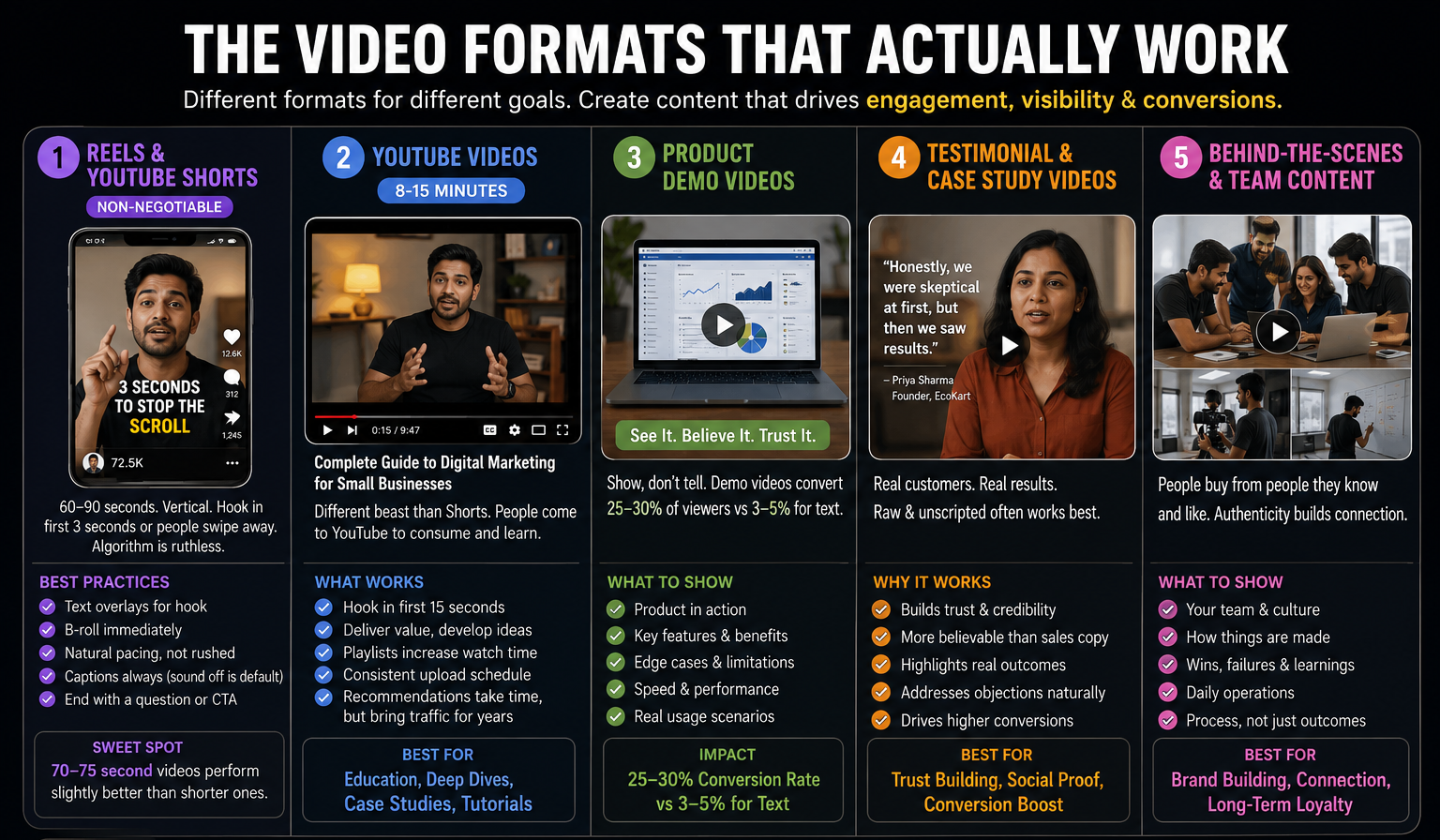
1. Reels & YouTube Shorts (Non-negotiable)
60-90 seconds. Vertical format. Hooks in the first 3 seconds or people swipe away. The algorithm is ruthless here. If your first 3 seconds don’t make someone stop scrolling, your video is dead.
Best practices: Text overlays for hook, B-roll immediately, pacing that feels natural not rushed, captions always (sound off is default), and end with a question or CTA. We’ve found 70-75 second videos perform slightly better than shorter ones — enough time to tell something useful without testing patience. For a deeper look at why short-form is dominating, see our piece on the rise of short-form video content
2. YouTube Videos (8-15 minutes)
Different beast than Shorts. People come to YouTube looking to consume. They’ll watch longer if you deliver value. This is where you can do actual educational content, case studies, detailed walkthroughs.
Hook still matters — first 15 seconds determine if someone clicks away. But you have more time to develop ideas. Playlists help. Consistent upload schedule helps. YouTube recommendations take months to kick in but once they do, you get traffic for years.
3. Product Demo Videos
Show, don’t tell. I’ve seen demo videos that convert 25-30% of viewers compared to 3-5% for text. People want to see the product working, edge cases, limitations, speed. If you skip that, they don’t trust you. Our corporate video production service is built exactly around this — making your product’s value visible and credible.
4. Testimonial & Case Study Videos
Real customers talking about real results. Raw, unscripted sometimes works better than polished. A customer saying “honestly we were skeptical but then we saw results” is more credible than your sales page saying “see amazing results.”
5. Behind-the-Scenes & Team Content
People buy from people they know and like. Show your team. Show the process. Show failures. This builds connection in a way polished marketing can’t. Desi businesses especially do well with this — Indian consumers respond to authenticity, to characters they recognise.
The Production Process That Works
Creating high-quality videos doesn’t always require a large budget or a full production team. By following a structured process—from planning and filming to editing and optimization—you can produce engaging content efficiently while maximizing your return on investment.
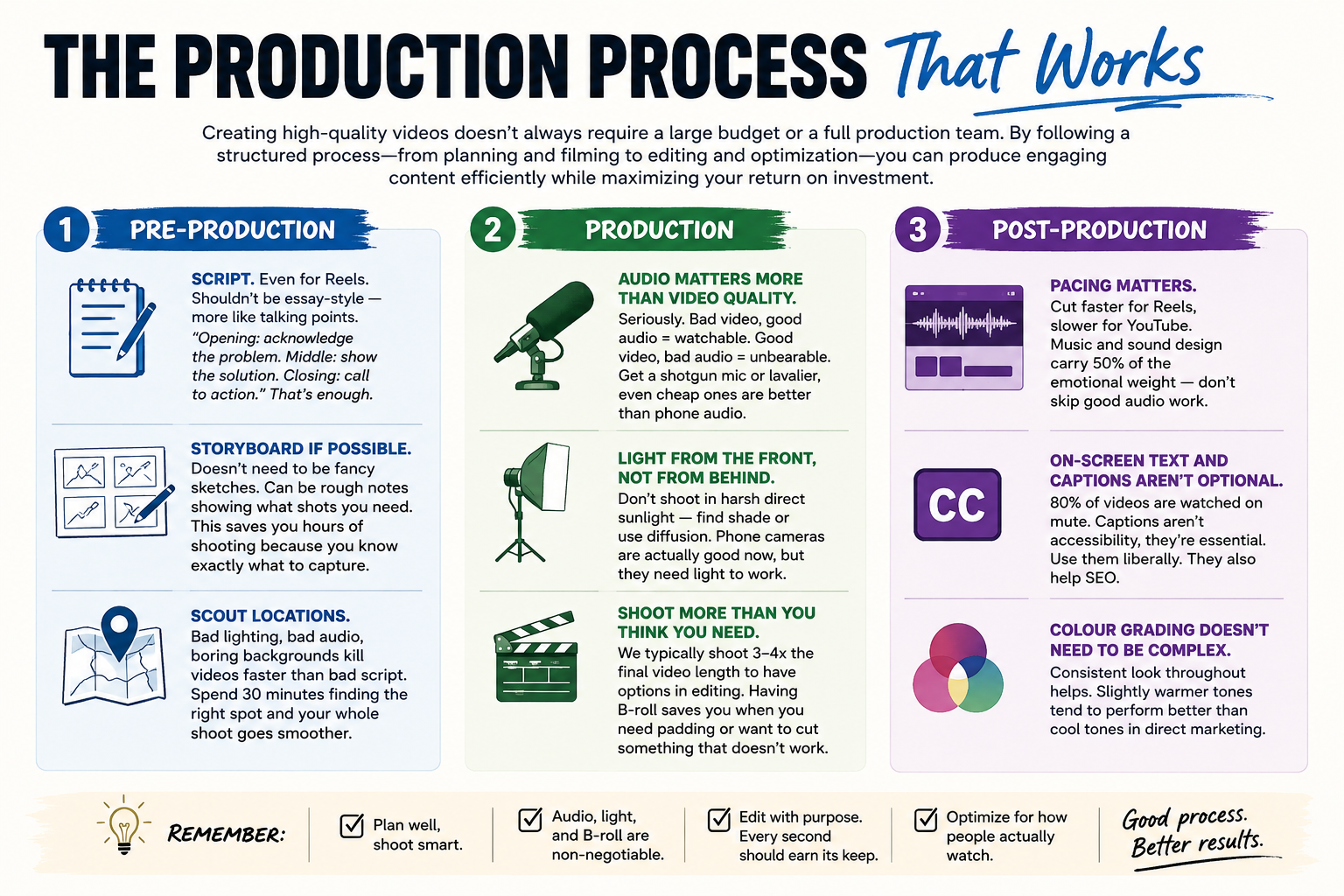
1. Pre-Production
Script. Even for Reels. Shouldn’t be essay-style — more like talking points. “Opening: acknowledge the problem. Middle: show the solution. Closing: call to action.” That’s enough.
Storyboard if possible. Doesn’t need to be fancy sketches. Can be rough notes showing what shots you need. This saves you hours of shooting because you know exactly what to capture.
Scout locations. Bad lighting, bad audio, boring backgrounds kill videos faster than bad script. Spend 30 minutes finding the right spot and your whole shoot goes smoother.
2. Production
Audio matters more than video quality. Seriously. Bad video, good audio = watchable. Good video, bad audio = unbearable. Get a shotgun mic or lavalier, even cheap ones are better than phone audio.
Light from the front, not from behind. Don’t shoot in harsh direct sunlight — find shade or use diffusion. Phone cameras are actually good now, but they need light to work.
Shoot more than you think you need. We typically shoot 3-4x the final video length to have options in editing. Having B-roll saves you when you need padding or want to cut something that doesn’t work.
3. Post-Production
Pacing matters. Cut faster for Reels, slower for YouTube. Music and sound design carry 50% of the emotional weight — don’t skip good audio work.
On-screen text and captions aren’t optional. 80% of videos are watched on mute. Captions aren’t accessibility, they’re essential. Use them liberally. They also help SEO.
Colour grading doesn’t need to be complex. Consistent look throughout helps. Slightly warmer tones tend to perform better than cool tones in direct marketing.
Making Videos That Actually Rank and Convert
YouTube ranks videos heavily for watch time and engagement. So your hook has to work and your content has to retain people. A 10-minute video with 40% average watch time ranks better than a 5-minute video with 20% watch time.
Optimise titles for search. Include your keyword. Include numbers if possible. “5 Ways to…” outranks “Ways to…”
Descriptions matter. Write 200+ words with keywords naturally included. Links to relevant content. Timestamps if video is longer than 5 minutes. These principles connect directly to a broader SEO strategy for your business — video SEO and text SEO work best together.
Thumbnails determine if someone clicks. High contrast, faces with strong emotions, text overlay that intrigues. A/B test thumbnails. Some perform way better than others for the same content.
Playlists help YouTube recommend your videos together. Group by topic. More watch time per session means better algorithmic boost.
For Reels and TikTok, the algorithm is different. Less about keywords, more about engagement rate and watch time. Hooks, retention, whether people share or comment. It’s less forgiving but also faster to get results if content works.
The Most Common Video Marketing Mistakes
- Making videos for you instead of your audience. You think it’s cool. Your customers think it’s boring. Test with actual customers, not your team.
- Skipping captions. Again. I know I mentioned it. It’s that important. Most video views happen on mute. You’re losing 40-50% of your message if you don’t caption.
- Uploading once then abandoning. Video success compounds like written content. Upload regularly. Same channel, same audience, they start anticipating your content. One video every six months won’t build anything.
- Not tracking what works. You publish 20 videos and wonder why 3 got 10x more views than the others. Watch the data. Which thumbnails, titles, topics, lengths worked? Do more of those.
- Making videos too long. We say 8-15 minutes for YouTube but honestly, if you can tell your story in 5, do that. People respect your time more when you respect theirs. The best length is exactly as long as the content needs to be, not longer.
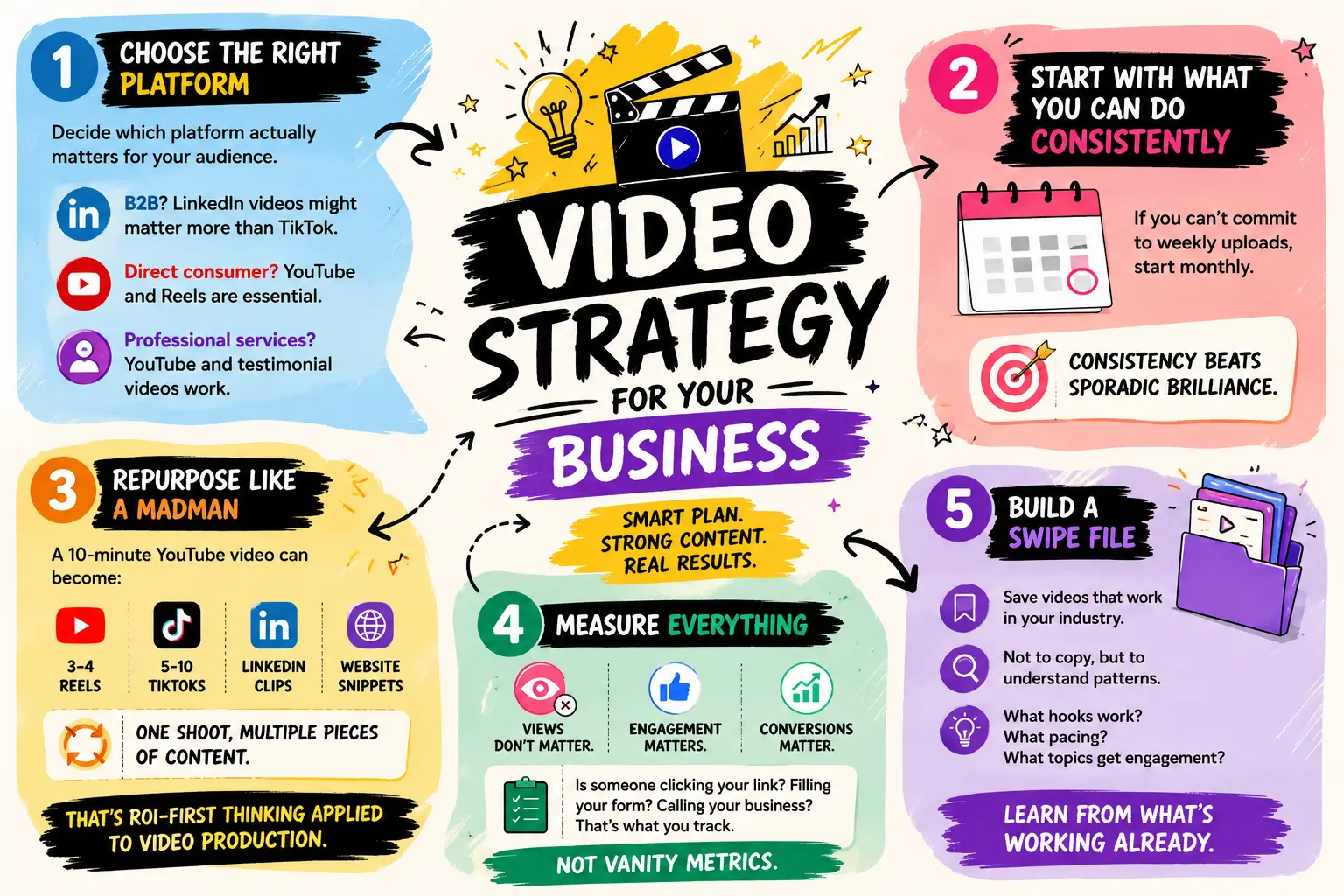
Video Strategy for Your Business
- First: decide which platform actually matters for your audience. B2B? LinkedIn videos might matter more than TikTok. Direct consumer? YouTube and Reels are essential. Professional services? YouTube and testimonial videos work.
- Second: start with what you can do consistently. If you can’t commit to weekly uploads, start monthly. Consistency beats sporadic brilliance.
- Third: repurpose like a madman. A 10-minute YouTube video can become 3-4 Reels, 5-10 TikToks, LinkedIn clips, and snippets for your website. One shoot, multiple pieces of content. That’s ROI-first thinking applied to video production. It’s also core to how a content marketing strategy should work — create once, distribute everywhere.
- Fourth: measure everything. Views don’t matter. Engagement matters. Conversions matter. Is someone clicking your link? Filling your form? Calling your business? That’s what you track. Not vanity metrics.
- Fifth: build a swipe file. Save videos that work in your industry. Not to copy, but to understand patterns. What hooks work? What pacing? What topics get engagement? Learn from what’s working already.
The Real Thing About Video
Production is learnable. Ideas are harder. Bad content doesn’t become good because you spent more on equipment. But good content can transform lives on any budget. That’s why we emphasize idea development over production value.
Kalakari + Strategy means: creative instinct paired with business sense. Beautiful video that doesn’t convert is just entertainment. Converting video that looks rough still beats polished failure. Balance both and you’re unstoppable.
If you want to explore video strategy for your brand — whether starting from zero or optimising what you’re already doing — let’s have a real conversation. We’ve built video strategies for everyone from manufacturing brands to consumer companies. What works for you depends on your specific audience and business model.
| Approach | Best for | Watch out for |
|---|---|---|
| DIY | Small teams, tight budgets | Slow ramp-up, trial-and-error |
| Freelancer | Specific project bursts | Inconsistency, limited ownership |
| Agency | Ongoing work, senior input | Higher retainer, less control |
Quick checklist before you start:
- Define the one thing you want: leads, sales, awareness — pick one.
- Baseline your numbers: write down where you are today.
- Pick a 90-day window: nothing moves in 2 weeks.
- Agree on success metrics: with whoever is paying the bill.
- Set up proper tracking: GA4, UTMs, call tracking.
- Review monthly: kill what doesn’t work, double down on what does.
The Bottom Line
If you take one thing from this: video marketing strategy the only guide you actually need rewards patience and specificity, not volume or clever tricks. Start small, measure honestly, fix what breaks, and compound what works. The brands doing this well in India aren’t smarter — they’re just consistent. Need a hand with this for your business? Talk to us.
Need a Video Strategy That Works?
We’ve built video campaigns for 50+ brands. Some start from zero. Some optimise what’s failing. Either way, results come from strategy, not just production.
FAQs
-
What's the best video format for marketing in 2026?
Ans.Reels and YouTube Shorts dominate. 60-90 seconds. Vertical. Hooks within the first 3 seconds. Longer YouTube videos work too, but only if they're actually useful. Your audience needs a reason to stick past 10 seconds. -
How much does a marketing video cost?
Ans.DIY phone video with decent audio? Negligible if you do the work. Professional shoot with small crew and one location? Rs 50,000-2 lakhs. Multi-location with actors? Way more. More expensive doesn't mean better results. We've seen Rs 5,000 Reels outperform Rs 5 lakh productions that felt corporate. -
Do I need a huge production team?
Ans.No. You need one good camera (smartphone fine), decent audio, basic lighting, and someone who frames shots well. Ideas beat equipment. -
How do I know if my video is working?
Ans.Track watch time, not just views. Views without completion means nothing. Track clicks, conversions, comments, shares. And measure if video leads to sales. If 1,000 views doesn't translate to anything, you're making the wrong content.
Author Details

Latest Posts
-
 26 / Aug
Search Engine Optimization Video SEO: How to Rank Your Videos in Google & YouTube
26 / Aug
Search Engine Optimization Video SEO: How to Rank Your Videos in Google & YouTube -
 25 / Aug
Video Production Corporate Video Production: A Practical Guide for Indian Brands
25 / Aug
Video Production Corporate Video Production: A Practical Guide for Indian Brands -
 24 / Aug
-
21 / Aug
Catalogue Design Catalogue Design: How to Create Catalogues That Actually Sell
-
 20 / Aug



Related Knowledge